
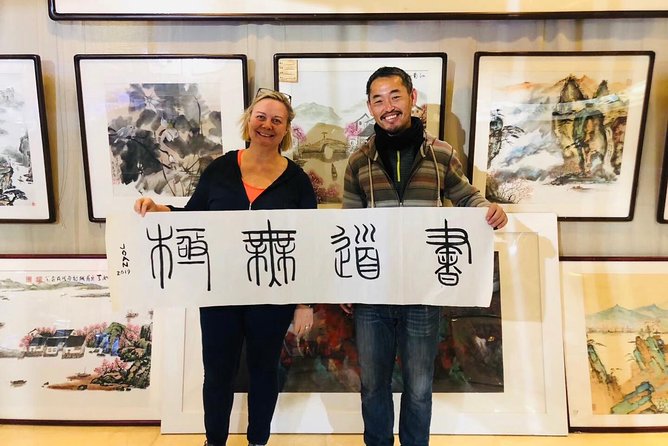
Review · BEIJING CALLIGRAPHY CLASSES
Noon Calligraphy Class
Chinese calligraphy turns writing into a physical art: each mark depends on the angle of the brush, the pressure of your hand, and the pace of the stroke. At this class on Wangfujing Dongjie, you get to try it yourself, with an art teacher guiding you through the tools and the meaning behind the characters.
I like two things in particular: you get hands-on practice, not just a talk about Chinese culture, and the finished piece can be taken home. I also like the short, flexible class options, which make this an easy cultural pause in a busy Beijing day.
The main consideration is time. The experience is described as about an hour, but you can choose a 30-minute, one-hour, or 1.5-hour session when booking. Check which length you are selecting, since the amount of time you have to practice will make a real difference.
- Brushwork is the point: Learn how strokes form characters, with an instructor to guide your practice.
- Tools get an introduction: The class covers brushes, rice paper, ink stones, and seal carving.
- You make a final piece: Build up through practice, then create work you can take home.
- The group stays limited: The maximum is 15, so this is a shared class rather than a private lesson.
- Choose your class length: Sessions are offered in 30-minute, one-hour, and 1.5-hour formats.
- Central Beijing address: Meet at No. 8 Wangfujing Dongjie, near public transportation.
A brush, a character, and a different way to slow down
Chinese calligraphy is more than writing neatly. The brush records movement: how firmly you press, how quickly you lift, and how you guide the ink across the paper. Even a simple character can feel like a small study in patience and control.
That makes this class a useful change of pace from Beijing’s major sights. You are not spending the hour looking at a finished object behind glass. You are learning how the materials work and trying the movements yourself, with a teacher nearby to explain and correct.
The instructor introduces the brush, ink, rice paper, and ink stone, along with seal carving. The emphasis is practical, but there is cultural context too. You learn about the form while practicing it, rather than treating calligraphy as a craft activity with no connection to Chinese language or tradition.
Expect to begin as a beginner. Several participants describe having time to practice before making a final piece, and that is the right way to approach it. The first strokes may look awkward. That is part of the lesson: a brush does not behave like a pen, and Chinese calligraphy is harder than it looks from across a museum room.
Finding the class on Wangfujing Dongjie
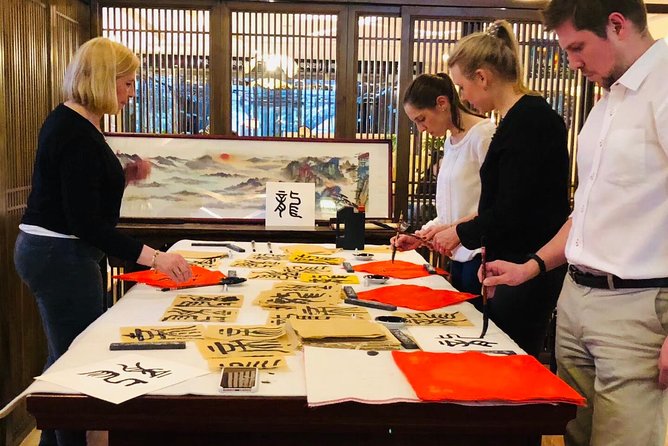
The class is at No. 8 Wangfujing Dongjie in Dongcheng District, with the Hilton Beijing Wangfujing given as the meeting point. The activity ends back at that same meeting point, so you do not need to plan for a separate return location.
The address places the class in central Beijing, and the venue is described as near public transportation. That is helpful if you are fitting the lesson between sightseeing stops or using it as a break from walking around the city. Still, allow time to find the exact entrance and confirm the meeting point details on your ticket. The address is also provided in Chinese, which can be useful if you need to show it to a driver or ask for directions.
This is a group activity, with a maximum of 15 people. That is small enough to feel like a class rather than a large demonstration, though it is not a private session. If you want a personal lesson with the teacher focused only on you, this format may not be the right fit.
More calligraphy classes around Beijing:
- Beijing Calligraphy Class
★ 4.9 · 112 reviews - Chinese Calligraphy Class for Small Group
★ 5.0 · 104 reviews - Beijing Historic City Guided Walking Tour + Calligraphy Creation
★ 5.0 · 59 reviews
What happens during the class
The basic sequence is straightforward: get introduced to the materials, learn about strokes and characters, practice, then make a final piece. The class is offered in three lengths, so the depth of that sequence depends on the option you choose.
In a 30-minute session, expect a compact introduction and a chance to try the brush. This may suit you if you have a tight schedule or want a brief cultural activity. The tradeoff is obvious: brush control takes practice, and a shorter class leaves less room to repeat movements or ask questions.
The one-hour format is the standard length described for the experience. It gives you more time to settle into the materials, hear explanations, and practice before attempting a finished work. At around $20 per person, this is a modestly priced, hands-on activity, especially if you value the instruction and the chance to take home what you make.
The 1.5-hour option gives you the most time with the teacher and the materials. If calligraphy is a particular interest, or you want room to practice without watching the clock, this is the option to consider. The supplied price is $20 per person, but the class lengths are selected at booking. Confirm the cost and exact session duration for your chosen option before you pay.
The teacher explains brush strokes and the materials, and you can ask questions during the class. Past participants have described the instructors as patient and clear. Richard and Li are names associated with instruction, though the teacher for your specific session is not guaranteed by the information available.
A useful detail is that the class is not only about copying a character. One participant describes learning the meaning behind the words being written. That cultural layer can make the final work feel less like a souvenir and more like something you understand a little better.
Why the materials matter
A calligraphy brush asks for a different kind of movement than a ballpoint pen. Pressure, angle, and pace affect the line, and the mark is visible immediately. There is no easy way to disguise a hesitant stroke, which is one reason the practice can feel both challenging and calming.
Rice paper adds another element. You are making decisions on a surface that responds to the brush and ink, rather than on an ordinary page. The class also introduces the ink stone and seal carving, tools that help place calligraphy in a wider artistic practice.
You should not expect to master Chinese calligraphy in one sitting. That is not the point. The value is in seeing how much thought sits behind a few strokes, and in getting a guided try at a skill that can otherwise seem distant or hard to approach.
A relaxed class, with room for questions
The mood described by past participants shifts from lively at the start to calm as the group settles in. That makes sense for a lesson that begins with new tools and ends in careful, repeated movements. One person compared the practice to meditation, while others focused on how relaxing it was to feel the brush move across the paper.
This is not a silent meditation session. It is a class, and the teacher explains what you are doing. But if you enjoy activities that reward concentration, you may find the rhythm soothing. If you would rather keep moving through a packed itinerary, a seated hour of brush practice may feel slow.
The teacher’s guidance is a major part of the experience. Clear instruction matters here because a brush can be difficult to control when you have never used one. The chance to ask questions also helps if you want to understand the meaning of the characters, not simply reproduce their shapes.
Children can participate, but they must be accompanied by an adult. Most people can take part, and the group is capped at 15. The class may work well for families, couples, or friends who want a shared activity that does not depend on athletic ability or prior knowledge of Chinese.
More hands-on workshops around Beijing:
- Beijing: Dumpling Making Workshop with Meal and Tea
★ 4.7 · 69 reviews - Online Cooking Class Beijing Dumplings and Cuisine by Sunflowerli Renowned Chef
★ 5.0 · 65 reviews - Beijing Wangfujing Calligraphy Class by Forbidden City
★ 5.0 · 58 reviews - Beijing Wangfujing Calligraphy Class Nearby Forbidden City
★ 5.0 · 56 reviews
What you take away
The practical souvenir is the piece you make during class. You get to keep your final work, which gives the lesson a lasting reminder beyond a few photos. The process is part of the keepsake: you will know which strokes came easily and which needed more patience.
Do not measure success by whether your writing looks like a master calligrapher’s. A short introductory class is for learning the basics, not producing professional work. The better measure is whether you leave with a clearer sense of how the brush behaves and why Chinese calligraphy is treated as an art form.
The lesson can also hold your attention if you are learning Mandarin. Writing Chinese characters by hand gives you a physical way to engage with them, though this is a calligraphy class rather than a full language lesson. You should not expect a structured Mandarin course or broad language instruction.
Is $20 good value?
At $20 per person, the one-hour class offers a reasonably priced activity with materials provided for use and an instructor leading the session. You are paying for more than access to supplies: the teacher’s explanations and time to practice are what turn a brush-and-paper activity into a cultural lesson.
The value depends on the session length you select. A 30-minute option may be a good fit for a brief introduction, but it is a tighter experience. The one-hour class is a sensible middle ground for most people, while 1.5 hours makes more sense if you want extra practice. Since the stated price and duration options appear together, verify the price attached to your chosen session when booking.
There are no listed extras included beyond the class and use of the calligraphy supplies. Any other expenses are not included. For a simple indoor activity, that keeps the cost easy to understand, but plan for anything else you may want to buy separately.
Who should book this class
Book it if you want a cultural activity that asks you to participate rather than watch. It is especially suited to first-time calligraphy students, couples, families with children, and anyone looking for a quieter hour in central Beijing. You do not need to arrive with artistic experience.
It can also be a good rainy-day choice. The class is indoors, and the activity gives you a reason to slow down without needing a full day or a complicated plan. If your Beijing schedule is tightly packed, the 30-minute option may be easier to fit, though you will have less time to practice.
Skip it if you are looking for a long, advanced course or a private lesson. The class is introductory, shared with a group, and capped at 15. Also, if you want an activity with constant movement or a broad tour of Beijing, this is a focused workshop, not a sightseeing walk.
A practical choice for a more personal Beijing moment
I would book this class as a compact way to learn through doing. The strongest reasons are the hands-on instruction and the chance to understand the materials and meaning behind the strokes. The finished piece gives you a tangible reminder of the hour, and the calm pace offers a welcome contrast to sightseeing.
Choose the class length with care. For most people, one hour should provide a useful introduction without taking over the day. Choose 1.5 hours if you want more time to practice, or 30 minutes if you mainly want to try the brush. At $20 per person, it is good value when you want an approachable introduction to Chinese calligraphy, not a shortcut to mastery.
FAQ
How long is the calligraphy class?
The experience is described as approximately one hour. You can choose a 30-minute, one-hour, or 1.5-hour class when booking.
How much does the class cost?
The listed price is $20 per person. Check the price shown for the specific class length you select.
Where does the class meet?
The meeting point is No. 8 Wangfujing Dongjie in Dongcheng District, Beijing. Hilton Beijing Wangfujing is also given as the meeting point.
Does the class include calligraphy materials?
Yes. Calligraphy supplies are provided for use during the class.
Can children attend?
Yes. Children can participate, but they must be accompanied by an adult.
How large is the group?
The maximum group size is 15 people.
Can I cancel for a refund?
You can cancel at least 24 hours before the experience starts for a full refund. Cancellations made less than 24 hours before the start time are not refunded.
Newest listings in Beijing
- Jinshanling Great Wall Small Group self-hiking tour from Beijing★ 4.5 · 6 reviews
- Small Group Mutianyu Great Wall and Ming Tombs Tour with Cable Car and Lunch★ 5.0 · 28 reviews
- Group Tour Including Mutianyu Great Wall And Buffet Lunch★ 4.5 · 28 reviews
- Mini Group: Half-Day Great Wall at Mutianyu Hiking Tour★ 5.0 · 33 reviews
- Beijing Group Coach Tour to Mutianyu Great Wall Without Lunch★ 4.5 · 6 reviews
- Private Tour: Beijing Hutong Night Walking and snacks Taste★ 4.0 · 29 reviews
- Small Group Tours to the Jingshaling Wall with Options★ 5.0 · 8 reviews
- Tai Chi or Kung Fu plus Chinese Calligraphy Learning Class★ 5.0 · 3 reviews
Beijing Calligraphy Classes, compared.
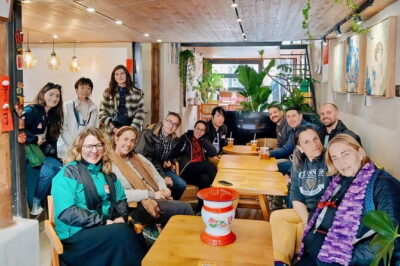
Beijing Historic City Guided Walking Tour + Calligraphy Creation
Read our review →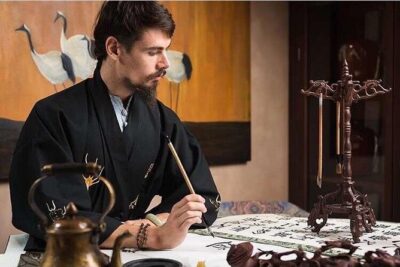
Beijing Wangfujing Calligraphy Class by Forbidden City
Read our review →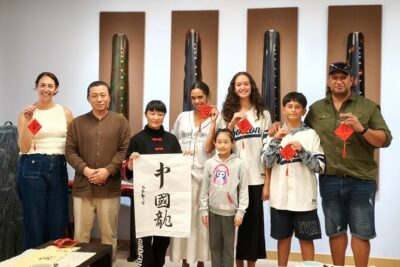
Beijing Culture: Tea Ceremony, Heritage Instrument & Calligraphy
Read our review →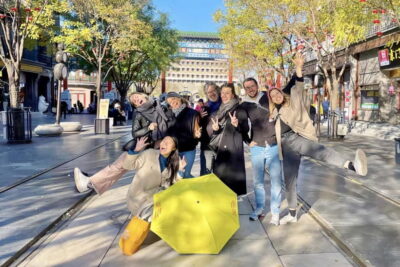
Discover Old Beijing: Hutong Walking Tour & Calligraphy
Read our review →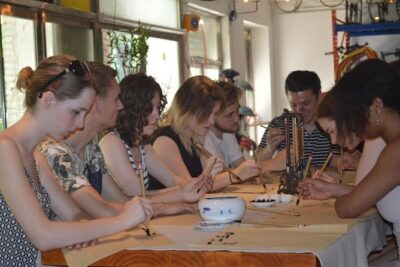
4-Hour Private Tour of Calligraphy Class, Hutong and Dumplings
Read our review →
Beijing Hands-On Culture Tour: Tea, Instrument, Calligraphy
Read our review →Browse the lists this tour appears in