
Review · BEIJING TEA EXPERIENCES
Beijing Culture: Tea Ceremony, Heritage Instrument & Calligraphy
The most unusual part of this Beijing workshop is that you get to play a melody on the Guqin, not just sit through a performance. You also brew and taste Chinese tea with a tea master, then try writing Chinese characters with a brush.
I like the small group, capped at eight, and the chance to learn the meaning behind each practice from a bilingual guide trained in history and sociology. One consideration: the venue is in Chaoyang, and transportation is not included, so allow time to reach the meeting point.
What to know before you book
- Three traditions in one session: Tea ceremony, Guqin music, and calligraphy fit into about two and a half hours.
- You take part: Brew tea, handle the calligraphy brush, and learn to play a melody on the Guqin.
- Small group: No more than eight people attend, which gives the instructors room to guide each participant.
- A quiet venue: The session takes place at a private, air-conditioned heritage venue in 813 Creative Park.
- Useful keepsakes: You can borrow traditional attire for the ritual and photos, and calligraphy can give you a piece to take home.
- Plan your transport: The meeting point is in Chaoyang, and getting there and back is not part of the experience.
A hands-on introduction to three Chinese arts
This is not a museum visit or a staged cultural show. The point is to slow down and try three practices that are often easier to watch than to understand: preparing tea, writing characters, and playing the Guqin. In two and a half hours, you get a guided introduction to each, with explanations of the ideas and rituals behind the actions.
That format suits a short Beijing stay. You won’t become an expert in tea, calligraphy, or music in one session, but you can leave with a clearer sense of what each tradition asks of its practitioner: attention, patience, and care. The experience is aimed at curious beginners, and you do not need prior knowledge to take part.
The hosts are described as cultural masters, including a national-level tea master and a national-level Guqin artist. A bilingual guide with a master’s degree in history and sociology helps put the activities in context. No individual instructor names are provided, so if a particular teacher is important to your decision, ask the operator before booking.
More calligraphy classes around Beijing:
- Beijing Calligraphy Class
★ 4.9 · 112 reviews - Chinese Calligraphy Class for Small Group
★ 5.0 · 104 reviews - Beijing Historic City Guided Walking Tour + Calligraphy Creation
★ 5.0 · 59 reviews
Starting with tea and the art of slowing down
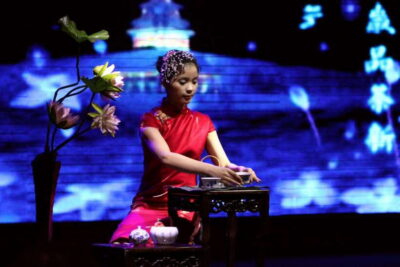
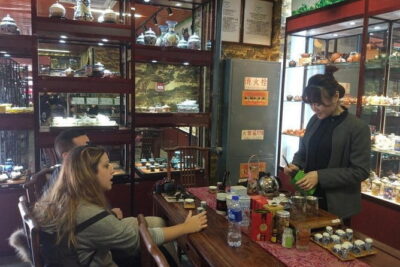
The tea ceremony is a natural way to begin. You brew and taste Chinese tea under the guidance of a certified tea master, with tea snacks included. This is more than a tasting: the focus is on the deliberate steps and the attention given to preparing and serving the tea.
That makes the session useful even if you already drink Chinese tea. Rather than simply sampling a cup, you can watch how the process is handled and ask what the gestures mean. The guide’s historical and cultural explanations help connect the ceremony to its wider setting without turning the workshop into a lecture.
The pace is part of the appeal. Beijing can fill a day with big sights and long walks; sitting down to make tea offers a quieter change of gear. If you prefer a fast-moving itinerary, the ceremony may feel slow. That is also the point. You are being asked to notice the process rather than hurry toward the next stop.
Tea snacks are included, but this is not a meal. Plan lunch or dinner separately, especially if you are scheduling the workshop around sightseeing.
Hearing the Guqin, then trying it yourself
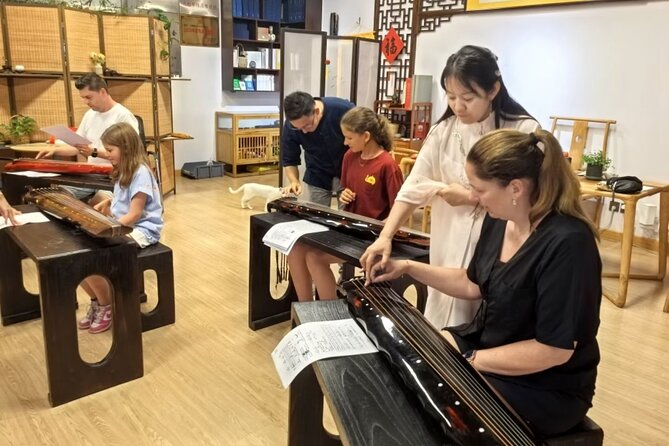
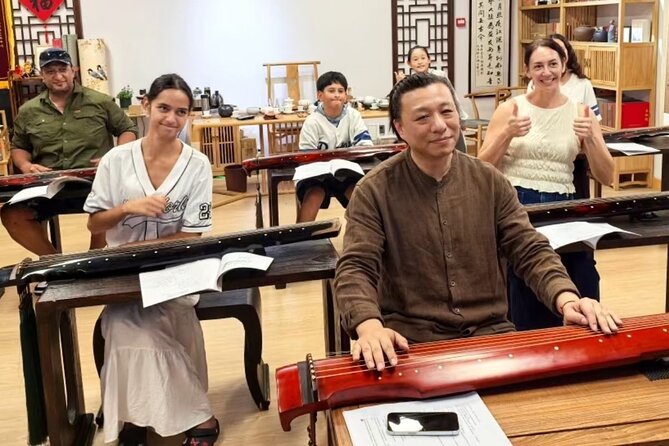
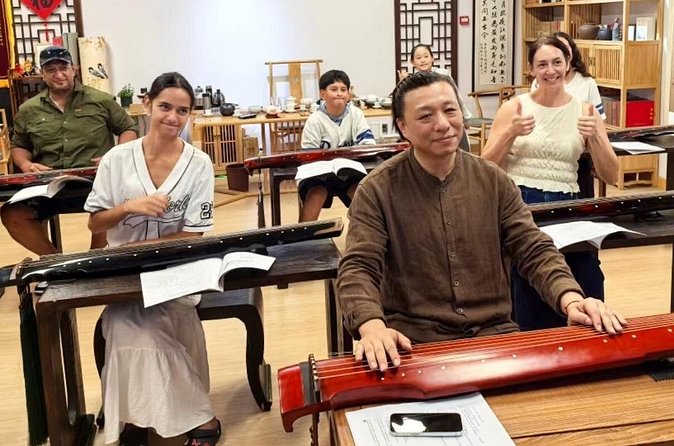
The Guqin is presented as one of China’s most revered classical instruments, and the session combines a live performance with a hands-on lesson. Hearing an experienced artist play gives you a sense of the instrument’s sound before you try it yourself. Then, with the artist guiding your fingers, you work toward playing a full melody.
That small step from listening to playing is what makes the music portion memorable. The instrument can feel distant when it is only displayed or performed on a stage. Here, you handle it and learn how it responds to your touch. You should not expect a long music lesson or mastery in a single sitting; the value is in making a real attempt and learning directly from a skilled practitioner.
The session may appeal even if you have no musical background. The experience is designed to be approachable, and a beginner can focus on following the instructor rather than worrying about technique. If you are already a musician, you may wish there were more time to explore the instrument. The short format makes this an introduction, not an intensive course.
The Guqin portion is also a quiet counterpoint to Beijing’s larger attractions. A live performance can be beautiful to hear, but sitting close enough to follow a lesson adds a personal dimension. It is a good reason to choose this workshop over a cultural presentation where you remain in your seat from start to finish.
Practicing calligraphy and taking a piece home
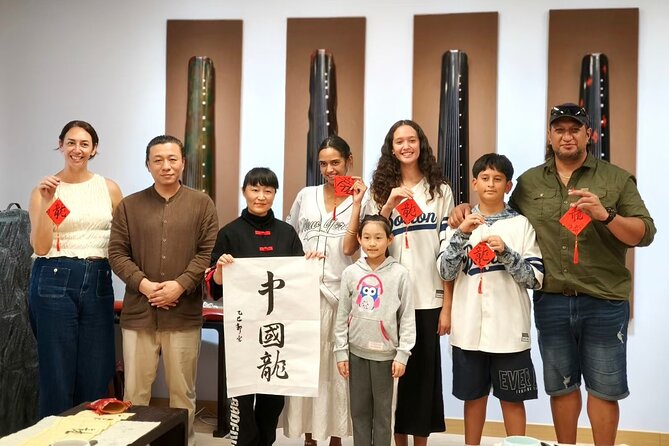
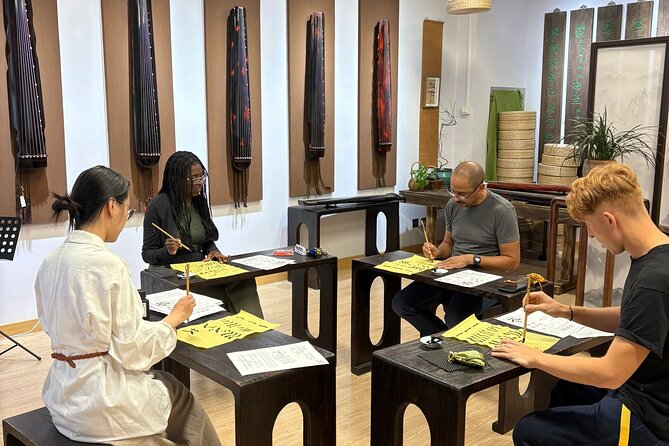
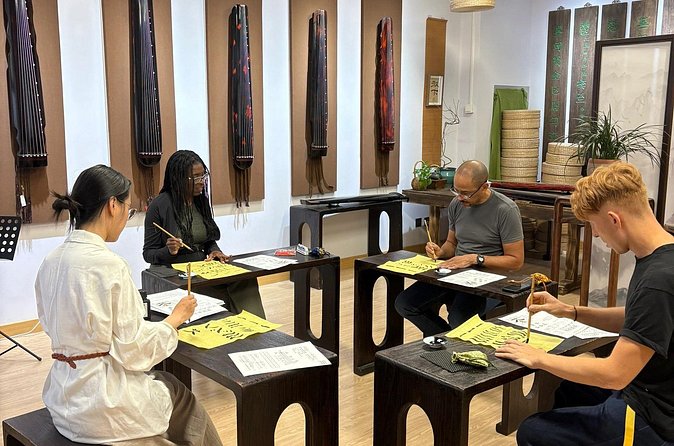
The calligraphy workshop gives you a brush, guidance, and a chance to write Chinese characters. The teacher can help you write your Chinese name, and you may take the finished paper with you. That tangible result gives the activity an easy afterlife: a reminder of the session that you can frame or keep.
Calligraphy is harder than it may look. The brush has its own feel, and forming a character takes more attention than writing with a pen. That challenge is part of the fun, particularly if you have never tried it. You are not expected to produce professional work. The useful lesson is seeing how a written character is built and learning something about its roots.
The workshop is a good fit for visitors who want to make something rather than simply collect photographs. Traditional attire is available to borrow for the ritual and photos, which can add a visual keepsake to the calligraphy. You can take part without needing to bring special clothing or supplies.
More tea experiences around Beijing:
- Traditional Chinese Tea Ceremony Experience
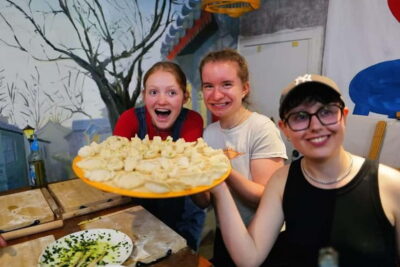
★ 4.7 · 74 reviews - Beijing: Dumpling Making Workshop with Meal and Tea
★ 4.7 · 69 reviews - Chinese Tea ceremony in Beijing Hutong courtyard
★ 4.7 · 26 reviews - Private Beijing Markets Tour with Tea Tasting at Hongqiao Pearl Market
★ 5.0 · 18 reviews
A private setting with room to ask questions
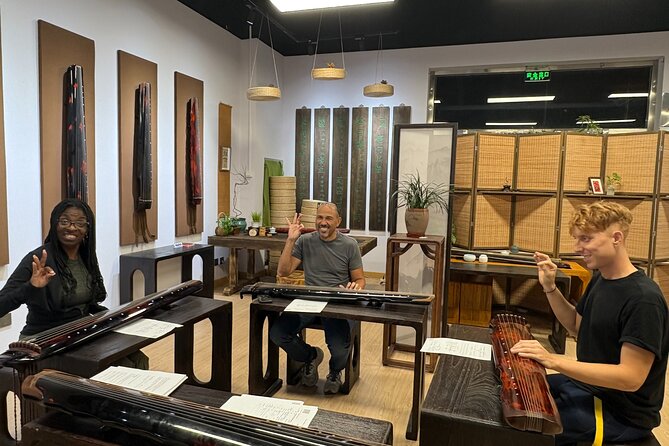
The venue is an air-conditioned private heritage space in 813 Creative Park, closed to the public during the experience. It is described as calm and arranged for the preservation of cultural traditions. The quiet setting matters: tea, music, and brushwork all benefit from fewer distractions than you would find in a crowded attraction.
The group is limited to eight people. That is a practical advantage, not just a selling point. With three different activities to try, a smaller group makes it easier to follow demonstrations and receive individual guidance. It also makes the experience feel more like a workshop than a performance for an audience.
The bilingual guide provides English-language support, while the specialists lead their respective practices. The guide’s academic background in history and sociology can help you make sense of the cultural context, while the artists bring direct experience with the traditions themselves. The balance between explanation and practice is central to the session’s appeal.
The quiet setting may not suit everyone. If you are looking for a lively group activity or a broad overview of Chinese culture, this focused workshop may feel too contained. It stays with three subjects rather than attempting to cover everything.
Is $78.60 good value?
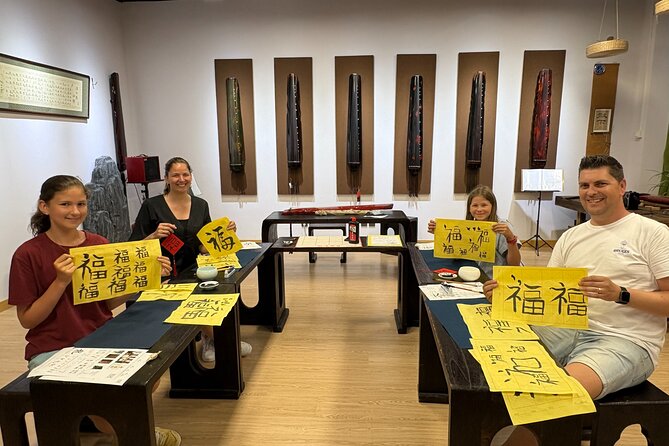
At $78.60 per person, this is more expensive than a basic tea tasting or a short calligraphy class. But the price covers about two and a half hours, three different activities, a bilingual guide, instruction from cultural specialists, a live Guqin performance, tea and snacks, and the loan of traditional attire. The group cap of eight also means you are not paying for a large, impersonal demonstration.
The value depends on what you want from the time. If your priority is ticking off major sights, the money may be better spent elsewhere. If you want an active cultural experience that combines instruction, performance, and a few take-home memories, the price is easier to justify. You are paying for access to practitioners and the chance to try the traditions, not for a long list of attractions.
The experience is booked an average of 51 days in advance, so it is sensible to plan early if you have a fixed date in mind. Confirmation is provided within 48 hours of booking, subject to availability.
Getting to 813 Creative Park
The meeting point is 813 Creative Park, VGP3+CCX, Chaoyang, Beijing, 100124. The activity ends back at the same point. Transportation to and from the venue is not included, though the location is near public transportation. Check your route before the day and leave enough time to arrive without rushing into the first tea ceremony.
This matters more than it might for a central sightseeing stop. A relaxed workshop loses some of its calm if you have to race across town to make it. The operator lists the meeting point, but does not specify a pickup service or provide transportation.
The venue is air-conditioned, and the activity is described as suitable for most people. Service animals are allowed. The supplied details do not specify step-free access or other mobility arrangements, so contact the operator if you have a particular access need.
The activity requires good weather and a minimum number of participants. If poor weather or a low sign-up count forces cancellation, you can be offered another date or experience, or receive a full refund. You can also cancel for a full refund up to 24 hours before the start time; later cancellations are not refunded.
Who will enjoy this workshop most?
I would choose this for a visitor who wants to understand a little more than what a guidebook can explain, and who is happy to learn by doing. It works especially well for first-time visitors who want a quieter break from major sights, as well as repeat visitors looking for a more personal way to spend part of a day in Beijing.
It also suits people with different interests in the same group. One person may be drawn to tea, another to music, and another to calligraphy, but everyone gets a turn with all three. You do not need to arrive with specialist knowledge, and the small group gives you a chance to ask questions.
On the other hand, skip it if you want a full meal, a private lesson, or a deep course in any one discipline. The time is divided across three activities, and transportation is on you. It is a compact introduction, not a substitute for sustained study.
Should you book it?
Book this workshop if you value direct contact with cultural practitioners and want to do more than watch. The tea ceremony, guided Guqin lesson, and calligraphy practice offer three distinct ways into Chinese heritage, while the intimate venue and eight-person cap keep the session personal. Allow for the trip to Chaoyang, and set expectations accordingly: this is a thoughtful introduction, not a master class. For the right visitor, it is a worthwhile change of pace from Beijing’s larger sights.
FAQ
How long is the experience?
It lasts approximately two hours and 30 minutes.
What activities are included?
The experience includes a traditional tea ceremony and tasting, a live Guqin performance and hands-on lesson, and a Chinese calligraphy workshop.
Is the session guided in English?
Yes. A bilingual guide leads the experience and has a master’s degree in history and sociology.
How many people can join?
The group has a maximum of eight participants.
Where does the experience start and end?
It starts at 813 Creative Park in Chaoyang and ends back at the same meeting point.
Is transportation included?
No. Transportation to and from the venue is not included. The meeting point is near public transportation.
More history tours around Beijing
- Beijing Historical Tour II including Summer Palace, Lama Temple & Panda Garden
★ 4.0 · 187 reviews - Beijing Historical Tour I – Forbidden City, Tiananmen Square & Temple of Heaven
★ 4.0 · 120 reviews - 2-Hour Beijing Private Forbidden City Tour: History & Highlights
★ 5.0 · 28 reviews - Beijing: Bell and Drum Towers Entry Ticket—Historic Landmark
★ 4.6 · 23 reviews
Newest listings in Beijing
- Jinshanling Great Wall Small Group self-hiking tour from Beijing★ 4.5 · 6 reviews
- Small Group Mutianyu Great Wall and Ming Tombs Tour with Cable Car and Lunch★ 5.0 · 28 reviews
- Group Tour Including Mutianyu Great Wall And Buffet Lunch★ 4.5 · 28 reviews
- Mini Group: Half-Day Great Wall at Mutianyu Hiking Tour★ 5.0 · 33 reviews
- Beijing Group Coach Tour to Mutianyu Great Wall Without Lunch★ 4.5 · 6 reviews
- Private Tour: Beijing Hutong Night Walking and snacks Taste★ 4.0 · 29 reviews
- Small Group Tours to the Jingshaling Wall with Options★ 5.0 · 8 reviews
- Tai Chi or Kung Fu plus Chinese Calligraphy Learning Class★ 5.0 · 3 reviews
Beijing Tea Experiences, compared.
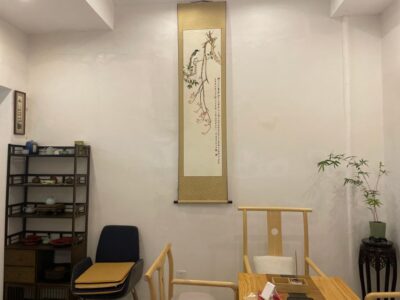
Chinese Tea ceremony in Beijing Hutong courtyard
Read our review →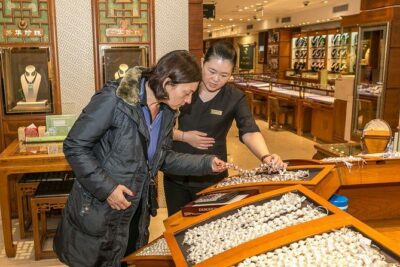
Private Beijing Markets Tour with Tea Tasting at Hongqiao Pearl Market
Read our review →
3-hour Morning/Afternoon Tea Tasting on Maliandao Street & Dimsum
Read our review →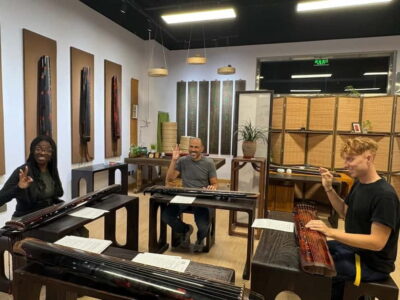
Beijing Hands-On Culture Tour: Tea, Instrument, Calligraphy
Read our review →
Beijing:Summer Palace & Tea or Calligraphy Experience Tour
Read our review →Browse the lists this tour appears in