
Review · BEIJING TOURS
Beijing:Drum and Bell Towers Entry Ticket- Cultural Treasure
Beijing’s Bell and Drum Towers once kept the city on time. The Drum Tower marked dusk, and the Bell Tower announced morning. Today, their scale, historic wooden architecture, and position at the northern end of Beijing’s central axis make them a rewarding stop for anyone curious about how the old capital worked.
I like two things here: the chance to see a 63-ton bell up close, and the English visual guide, which adds context without tying you to a group or a fixed pace. The towers also put you near Beijing’s hutongs, so it’s easy to pair the visit with a walk through nearby lanes.
The main drawback is practical: the tower stairs are steep and long, and the $13 ticket may cost more than buying entry on site. This is a better fit if you value advance arrangements and a useful English guide than if you’re focused on paying the lowest possible price.
Key points to know before you go

- Two tower tickets are included: You get entry to both the Bell Tower and Drum Tower.
- The English guide is written and visual: It offers context for an independent visit, not live commentary.
- The bell is the heavyweight attraction: Cast in the Ming Dynasty’s Yongle era, it weighs 63 tons.
- The towers marked time for centuries: Their timekeeping role continued through the Yuan, Ming, and Qing dynasties.
- Allow about two hours: That gives you time for both buildings and the guide, at your own pace.
- Expect demanding stairs: The climb may not suit you if mobility is limited.
Beijing’s old clock, built from drums and bronze

At the northern end of Beijing’s central axis, the Bell and Drum Towers offer a view into a city that once relied on sound, not wristwatches, to mark the day. The towers were initially built during the Yuan Dynasty, from 1206 to 1368, and continued to serve as the capital’s timekeeping center through the Ming and Qing periods.
The system was simple in outline, but impressive in scale. A dusk drum signaled evening; a morning bell announced the start of the day. The Drum Tower once held 25 drums. The Bell Tower’s best-known bell, cast during the Yongle era of the Ming Dynasty, weighs 63 tons and is known as China’s King of Ancient Bells.
Those facts matter because the towers are not just decorative old buildings. They were part of the city’s daily rhythm, and their size reflects the importance of keeping time across the capital. I find that context helps you see the buildings as working civic landmarks rather than as two more historic structures to photograph and leave.
The layout has a small wrinkle worth noticing: the Bell Tower sits slightly north of the Drum Tower. Together, the buildings form a protected historic complex covering 12,597 square meters. Their unusual arrangement and grand scale helped make Beijing’s pair a model for Bell and Drum Towers elsewhere in ancient China.
More tickets and passes around Beijing:
- Beijing: Forbidden City Tour(Group/Private)-Tickets Included
★ 4.8 · 7,974 reviews - 4-Hour Small Group Tour to Forbidden City with Entry Tickets
★ 5.0 · 1,863 reviews - Beijing: Tiananmen Square Registration Service(Ticket)
★ 4.5 · 1,704 reviews
Starting with the Drum Tower
A sensible way to approach the visit is to begin with the Drum Tower, then continue to the Bell Tower. The activity includes entry to both, though no fixed route or live tour is specified. You can use the English guide to decide what to focus on and how long to linger.
The Drum Tower’s former set of 25 drums is an immediate reminder of how time was announced before clocks were common. The historic system centered on the drum at dusk and the bell in the morning. The building’s scale also gives you a feel for the public role these towers played: they were city landmarks with a practical job, not simply ornaments for the skyline.
The English textual and visual guide is useful here because the experience is self-guided. It gives you information to read as you go, rather than relying on a guide to explain the objects and history in person. One visitor who booked during Golden Week found the accompanying English PDF useful for learning about the hutongs and finding nearby restaurants. That sort of extra context can help you turn a tower visit into a larger neighborhood outing.
Do not mistake the self-guided format for a guided tour, though. There is no live guide and no audio guide included. If you prefer a person to answer questions as they come up, this ticket does not provide that service. If you like to take your time, read at your own pace, and choose what interests you, the independent format is a good match.
The Bell Tower and its 63-ton centerpiece
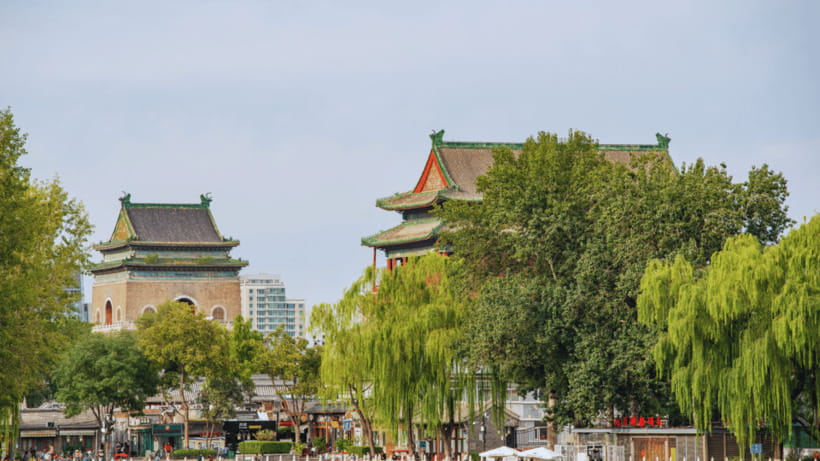
The Bell Tower is the natural climax of the visit. Its Ming-era bell, cast during the Yongle reign from 1403 to 1424, weighs 63 tons. That is not a small detail buried in a timeline. It tells you something about the size of the object and the effort required to make a bell intended to carry across a major city.
The bell’s role was part of the daily routine: its morning sound helped mark the start of the day, paired with the Drum Tower’s signal at dusk. Once you know that, the two buildings make more sense as a linked system. The Bell Tower was not simply the one with the larger object; it had a distinct part in organizing the capital’s hours.
The site information describes the towers as architectural examples of ancient Chinese city design. Their stature and slightly offset placement give the pair a character you can appreciate even without specialist knowledge. The visual guide can help you connect the architecture to the towers’ public purpose, but the visit remains an independent one rather than a lecture.
The climb is the key physical consideration. The stairs are reported to be steep and fairly long, so take that seriously if you have limited mobility or are uncomfortable with a sustained climb. The information available does not spell out facilities or alternate access, so do not assume there is an easier route to the upper levels.
Making the most of a two-hour visit

Two hours is a useful planning estimate for seeing both towers and spending time with the guide. It leaves room to pause and read instead of racing from one entrance to the next, though your pace and interest in the displays will shape the visit.
I would use the guide to set a simple purpose for each tower. At the Drum Tower, focus on the former drum collection and how the dusk signal fit into city life. At the Bell Tower, give the 63-ton bell the time it deserves, then consider how the morning sound completed the daily cycle. This gives the visit a clear thread, rather than leaving you with a jumble of dates and building details.
The towers are also a natural starting point for exploring nearby hutongs. The English brochure has included information about the surrounding lanes and restaurant suggestions, which can be particularly handy if you are new to the area. That neighborhood material is an added bonus, not a separate guided walk or a meal included in the ticket.
The central-axis location makes the towers easy to understand as part of Beijing’s historic city plan, but no transport or connecting tour is included in this activity. Plan your route to and from the site separately. The ticket is for entry to the two towers, not a broader city tour.
More Beijing tours to consider
- From Beijing: Mutianyu Great Wall Tours with Options
★ 4.9 · 9,216 reviews - Beijing: T-Square & Forbidden City Group or Private Tour
★ 4.8 · 4,446 reviews - All-Inclusive Tour: Tiananmen Square, Forbidden City, Great Wall
★ 5.0 · 2,873 reviews - MuBus: Mutianyu Great Wall ENG/ESP/RUS Guided Bus Tour
★ 5.0 · 2,361 reviews
What the $13 ticket is worth

At $13 per person, the value depends on what you want from the booking. You get admission to both towers and an English textual and visual guide, plus the convenience of receiving e-tickets in advance. If you are visiting during a busy period, having entry arranged beforehand may be worth paying for, especially if you want to avoid the ticket line.
There is a fair counterpoint. One visitor felt the ticket price was excessive compared with what they would have paid on site. The actual on-site price is not specified here, so it is not possible to calculate the difference. Still, that concern is worth weighing: the convenience and English material have value, but they may not justify the extra cost for every budget-conscious visitor.
You can also reserve now and pay later, which offers flexibility if your plans are not fully settled. Cancellation is available up to 24 hours in advance for a full refund. Those terms are useful, but they do not change the basic value question: are you paying mainly for admission, or for the ease of having tickets and English reading material ready?
The ticket skips the ticket line, but that should not be read as a promise that every part of the visit will be queue-free. It is a practical advantage, not a guarantee of a private or guided experience.
Booking, entry, and the practical details
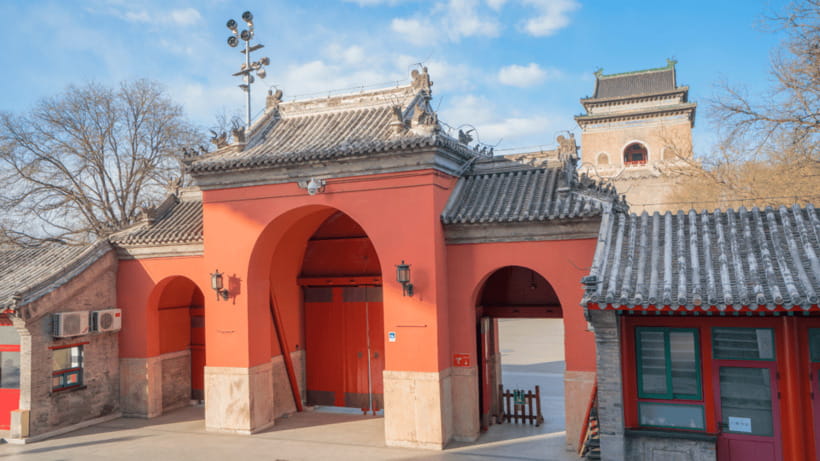
After booking, you need to provide your passport name, passport number, and date of birth. The ticket provider, Hua Hua Explore China, reserves the tickets three days before your visit. Once the reservation succeeds, your e-tickets are sent by email or WhatsApp, and you can enter both towers with those tickets.
Bring your passport or another ID card. Since passport information is requested for the reservation, check that the details you submit match the document you plan to carry. The activity lists English written and visual material, but no live guide or audio guide.
This is a modest amount of advance preparation, especially compared with joining a scheduled tour. You do not need to coordinate with a guide at a meeting point, but you do need to provide accurate personal details and keep the e-ticket accessible. If you prefer face-to-face explanation, arrange that separately; it is not part of this ticket.
The towers suit history-minded visitors who like architecture, city planning, and small, self-paced cultural stops. They also work well if you are already exploring the nearby hutongs and want a compact way to add a major landmark. Families or visitors with limited mobility should consider the long, steep stairs before booking.
Should you book the Bell and Drum Towers ticket?
Book it if you want entry to both towers arranged ahead of time, appreciate an English visual guide, and are comfortable exploring without a live guide. The 63-ton bell and the former 25-drum timekeeping system give the visit a strong central story, while the nearby hutongs make it easy to extend your outing.
Skip it, or compare on-site entry first, if your top priority is the lowest price. Also think twice if steep stairs are a problem. For the right visitor, this is a worthwhile two-hour stop that connects Beijing’s grand architecture to the ordinary task of telling time.
FAQ

What is included in the ticket?
The ticket includes entry to the Bell Tower and Drum Tower, plus an English textual and visual guide.
Is a live tour guide included?
No. A live tour guide is not included.
Is an audio guide included?
No. The activity does not include an audio guide.
How long should I allow for the visit?
The stated duration is two hours. You can use that time to visit both towers and read the included guide at your own pace.
What identification should I bring?
Bring your passport or an ID card. You will also be asked for your passport name, passport number, and date of birth after ordering.
How do I receive the tickets?
After the reservation is successful, the e-tickets are sent by email or WhatsApp. You can enter both towers directly with the supplied e-tickets.
Can I cancel for a refund?
Yes. You can cancel up to 24 hours in advance for a full refund.
Can I reserve now and pay later?
Yes. The activity offers a reserve-now, pay-later option so you do not have to pay at the time of booking.
Newest listings in Beijing
- Jinshanling Great Wall Small Group self-hiking tour from Beijing★ 4.5 · 6 reviews
- Small Group Mutianyu Great Wall and Ming Tombs Tour with Cable Car and Lunch★ 5.0 · 28 reviews
- Group Tour Including Mutianyu Great Wall And Buffet Lunch★ 4.5 · 28 reviews
- Beijing Group Coach Tour to Mutianyu Great Wall Without Lunch★ 4.5 · 6 reviews
- Mini Group: Half-Day Great Wall at Mutianyu Hiking Tour★ 5.0 · 33 reviews
- Private Tour: Beijing Hutong Night Walking and snacks Taste★ 4.0 · 29 reviews
- Small Group Tours to the Jingshaling Wall with Options★ 5.0 · 8 reviews
- Tai Chi or Kung Fu plus Chinese Calligraphy Learning Class★ 5.0 · 3 reviews
Beijing Tours, compared.


Forbidden City Tour(Group/Private)-Tickets Included
Read our review →
T-Square & Forbidden City Group or Private Tour
Read our review →
All-Inclusive Tour: Tiananmen Square, Forbidden City, Great Wall
Read our review →
MuBus: Mutianyu Great Wall ENG/ESP/RUS Guided Bus Tour
Read our review →
4-Hour Small Group Tour to Forbidden City with Entry Tickets
Read our review →