
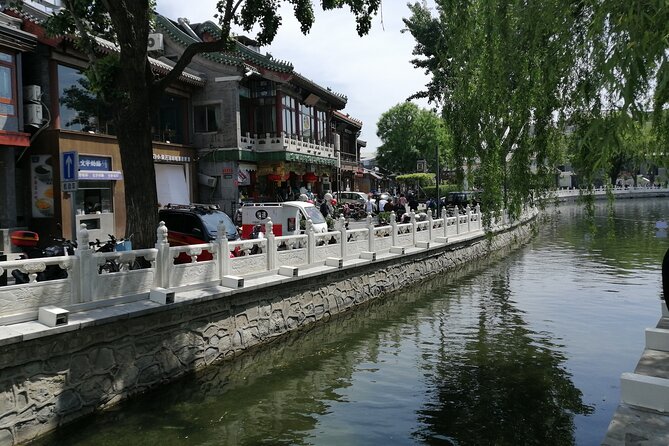
Review · BEIJING HUTONG TOURS
Beijing Hutongs Walking Tour
Beijing’s hutongs make the city feel suddenly human-scaled. On this walk, you leave the grand imperial landmarks behind and follow narrow lanes lined with grey courtyard houses, where the stories turn from emperors and monuments to the shape of everyday Beijing life.
I like two things in particular: the guide can connect places such as Mao’er Hutong to figures from China’s past, and the small-group limit of 15 leaves room to ask questions. Roy is praised for clear English and an engaging way of drawing people into the stories. One consideration: be exact about the meeting point and arrive on time. A past group missed each other at the start, and the stated finish location is not consistent across the tour details.
What to know before you book

- Start at Nanluoguxiang: Meet at Nanluoguxiang metro station, exit E, at 10:00 am.
- Walk through Yuan-era lanes: Nanluoguxiang’s grey courtyard homes and old trees offer a close look at traditional Beijing architecture.
- Hear the story of Wanrong: Mao’er Hutong includes the former residence of Empress Wanrong, Puyi’s empress.
- Expect a small group: The maximum group size is 15, with an English-speaking guide.
- Plan for about two hours: The advertised duration is roughly 1 hour 30 minutes to two hours.
- Check the finish point: The route details mention both the Drum Tower and Houhai, so confirm the exact endpoint before setting off.
A slower look at Beijing’s old lanes
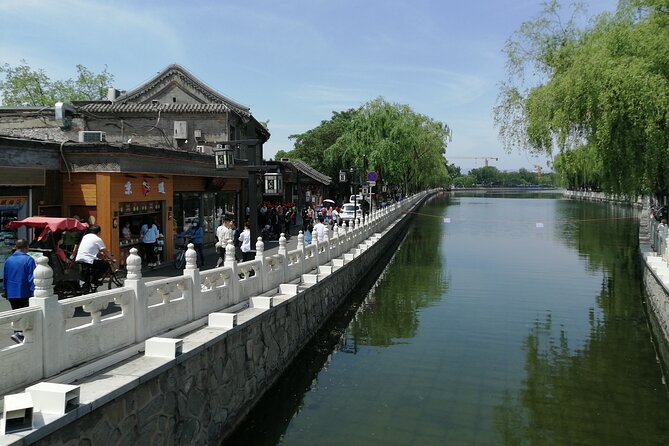
Beijing is famous for the Forbidden City, grand avenues, and monumental public spaces. Hutongs offer a different scale: narrow traditional lanes, courtyard houses, old trees, and the sense of a neighborhood shaped by daily life. This tour is built around that contrast, making it a useful way to see more than the city’s best-known imperial sights.
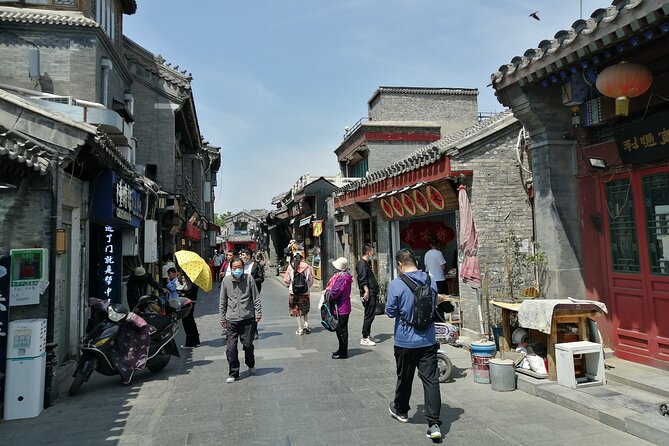
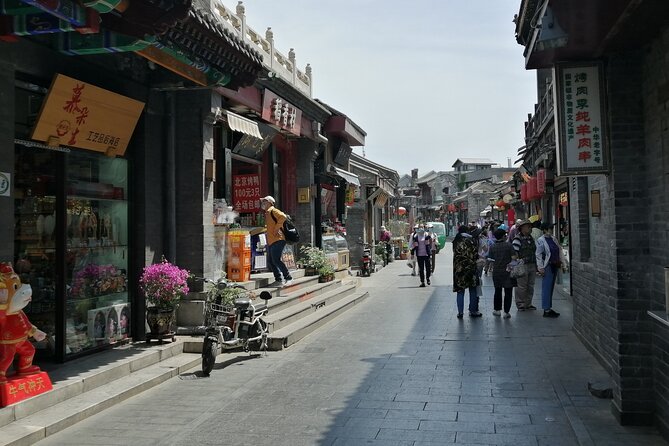
The walk begins at Nanluoguxiang, a lane associated with the Yuan Dynasty. Its grey-colored courtyard homes show a more local form of traditional architecture than the large palaces and temples many people put first on a Beijing itinerary. You are not just passing a row of old facades. With a guide, you can learn how the lanes fit into the city’s past and why it can be hard to make sense of the area on your own.
That guidance matters here. The hutong district is a network of small streets, and a walk without context can become a pleasant but confusing tangle of turns. A guide can help you connect the streets, buildings, and stories, while also answering questions as they arise.
The experience is deliberately unhurried. At about 90 minutes to two hours, it is long enough to explore a few distinct parts of the neighborhood without taking up half a day. It also works well early in a Beijing visit, when you are still building a picture of how the city’s older lanes relate to its larger landmarks.
More hutong tours around Beijing:
- Beijing Hutong Walking Food and Beer Tour at Hidden Restaurants
★ 5.0 · 1,132 reviews - Temple Heaven, Summer Palace, Lama Temple, Hutong Bus Tour
★ 4.7 · 319 reviews - Temple of Heaven, Summer Palace, Lama Temple, Hutong Tours
★ 5.0 · 311 reviews
Nanluoguxiang and its courtyard homes
Nanluoguxiang is the opening stretch, and it sets the tone for the rest of the walk. The lane’s grey courtyard houses and old trees are the central visual details. Rather than covering a long list of attractions, the tour uses this neighborhood to introduce Beijing’s traditional residential architecture and the history carried by its streets.
The Yuan Dynasty connection gives the area a long historical frame, but the appeal is not only age. Courtyard homes are a reminder that Beijing’s past was not made solely in imperial halls. The streets and homes offer a more intimate view of how the city was built and inhabited.
You should expect to walk and listen, not enter a series of monuments. Admission is not included, and the experience is presented as a guided stroll through the lanes. If you want interior visits or a formal museum component, this may not be the right tour on its own. If you want the guide to explain what you are seeing as you go, the format makes sense.
The small-group cap is a practical advantage in a place where streets are narrow. With no more than 15 people, it should be easier to hear the guide and ask questions than in a large coach group. That does not mean every moment will be private, but it gives the walk a more personal scale.
Mao’er Hutong and Empress Wanrong
The route continues along Mao’er Hutong, another chance to see traditional lanes and hear stories tied to specific buildings. One of the most notable stops is the former residence of Empress Wanrong, the empress of China’s last emperor, Puyi. The house is known as the Empress’s Mansion and is a designated photo stop.
This detail gives the walk a human thread through a period of major change. Puyi and Wanrong are not just names attached to a distant imperial era; their former home places that story within an ordinary neighborhood setting. You get a sense of how the people who occupied history’s grandest roles also lived in recognizable streets and houses.
The stop is for pictures, so set your expectations accordingly. The information provided does not promise an interior visit or a long stop inside the residence. The value is in seeing the building in its hutong setting and hearing the guide explain its connection to Wanrong and Puyi.
The guide’s storytelling is a key part of the experience. Roy is associated with this tour, and the strongest feedback about him points to good English, careful preparation, and questions that invite the group to take part rather than simply listen. The tour may also cover topics such as Chinese time-keeping and the fate of the last emperor, giving the walk a broader historical thread.
The waterway between Qianhai and Houhai
The route also takes in a narrow channel connecting Qianhai Lake and Houhai Lake. It adds a change of scenery after the close lanes and courtyard houses, and gives the guide another point from which to discuss the area’s history and layout.
The supplied route description does not specify a long stop or a particular activity at the channel. Think of it as part of the walk rather than a separate attraction with a guaranteed visit inside a building. Its value is in seeing how the hutong streets, water, and surrounding neighborhood fit together.
There is a small but important detail to sort out before booking. The meeting point is given as the south entrance to Nanluoguxiang, while the tour information says the walk finishes at the Drum Tower; a separate end-point field names Houhai. Because those locations are not the same, ask the operator to confirm exactly where the group ends. That matters if you have timed transport, another tour, or a specific plan afterward.
More walking tours around Beijing:
- Private Beijing Walking Tour of the Forbidden City with 7 Options
★ 5.0 · 675 reviews - Forbidden City Private Walking Tour with Optional Sights
★ 5.0 · 400 reviews - Beijing Private Hutong Food Walking Tour
★ 5.0 · 299 reviews - Beijing: Hutong Culinary Walking Tour with 15+ Tastings
★ 5.0 · 162 reviews
What the guide adds
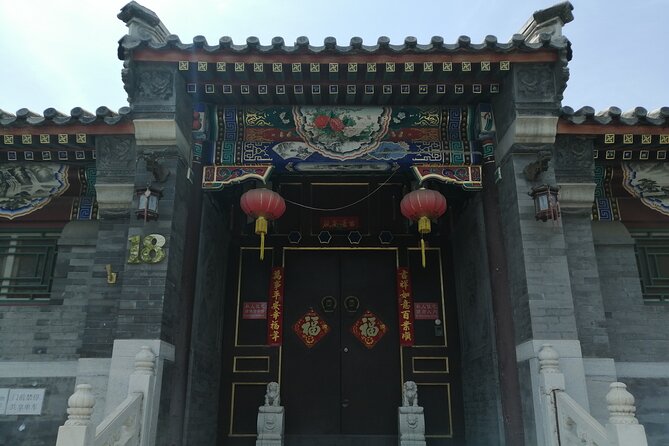
This is a guide-led walk, not a self-guided route with an audio track. The guide’s role is to make the place easier to read: explain why the lanes matter, connect buildings to historical figures, and help you understand the sequence of neighborhoods as you move through them.
The most useful feedback about the guiding points to clear English and an engaging style. Roy is praised for preparing the group with insights into life in Beijing, past and present, and for using questions to draw people into the story. That approach can make a short walking tour feel less like a lecture and more like a shared conversation.
The experience is also a good fit for people who like to ask questions. With a group limit of 15, you have a better chance of getting a response than you might on a much larger tour. Still, it is a group activity, so the guide’s time and attention are shared.
One practical caution is punctuality. A past start involved a disagreement about whether the group had waited at the correct meeting point, and the group moved on after about 25 minutes. The lesson is simple: use the exact South Luogu Lane metro station exit E meeting point, check the Chinese place name if helpful, and arrive a little early. The tour begins at 10:00 am.
Is $30 good value?
At $30 per person, the price buys a guided walk of roughly 90 minutes to two hours, in English, with a maximum group size of 15. You are paying for local context and a route through a district that can be difficult to navigate without help, rather than for admission to a major attraction or a long list of included extras.
I consider the price reasonable if you want an introduction to hutong life and appreciate having a guide connect buildings and history. It is less compelling if you only want to wander the lanes at your own pace, or if you expect museum-style access to historic homes. Admission tickets are not included, and no other inclusions are specified beyond the English-speaking guide.
The tour is listed with a 4.8 rating from 22 ratings, and 95 percent of participants recommend it. Those figures are encouraging, but the small number of ratings means they are best treated as a useful signal, not a guarantee. The praise centers on the guide, the historical detail, and the tour’s usefulness as a first look at Beijing.
Booking typically happens about 23 days in advance. That is an average, not a rule, but it suggests you should reserve ahead if this walk is important to your plans. Free cancellation is available up to 24 hours before the start time; changes or cancellations inside that period are not accepted for a refund. If the minimum group size is not met and the tour is canceled, you are offered another date or experience, or a full refund.
Who should take this walk?
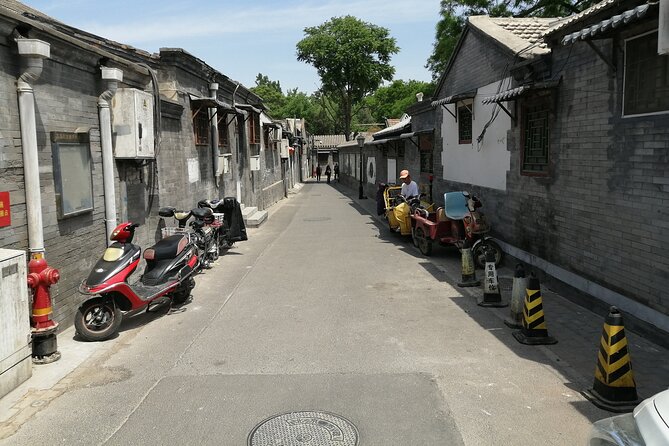
This tour suits you if you want a calm, compact introduction to Beijing’s hutongs and prefer a guide to explain what you are seeing. It is particularly useful at the start of a trip, when stories about the Yuan-era lanes, Wanrong, Puyi, and local architecture can help you place the city’s older neighborhoods in context.
It also suits curious walkers who enjoy history presented through particular streets and homes rather than through a long museum visit. The group is limited to 15, most travelers can participate, and service animals are allowed. The tour is near public transportation, with Nanluoguxiang station as the meeting point.
You may want to skip it if you need guaranteed access inside historic houses, want a private outing, or have a tight schedule that depends on a precise finish location. The mismatch between the Drum Tower and Houhai endpoint details deserves a quick check with the operator before you book.
Should you book the Beijing Hutongs Walking Tour?
Book it if you want an affordable, small-group walk that puts traditional courtyard homes and local history ahead of Beijing’s grand monuments. The combination of Nanluoguxiang, Mao’er Hutong, Wanrong’s former residence, and a guide who can explain the stories gives the tour a clear purpose.
Before paying, confirm the endpoint and make sure you can reach the Nanluoguxiang metro station exit E meeting point by 10:00 am. If the route, pace, and focus on outdoor neighborhood history match what you want, this is a practical way to begin understanding Beijing beyond its imperial center.
FAQ
How long is the Beijing Hutongs Walking Tour?
It lasts approximately 1 hour 30 minutes to two hours.
What time does the tour start?
The stated start time is 10:00 am.
Where does the tour meet?
Meet at the south entrance of Nanluoguxiang, at Nanluoguxiang metro station exit E.
What is the maximum group size?
The tour has a maximum of 15 participants.
Is the tour conducted in English?
Yes. An English-speaking guide is included.
Which historic residence is included on the route?
The walk stops for photos at the former residence of Empress Wanrong, Puyi’s empress, known as the Empress’s Mansion.
Does the tour include admission tickets?
No admission ticket is included.
Where does the tour finish?
The tour details state that it finishes at the Drum Tower, while another end-point field names Houhai. Confirm the exact finish point with the operator before booking.
Can I cancel for a refund?
You can cancel for a full refund up to 24 hours before the start time. Cancellations or changes made less than 24 hours before the experience are not accepted for a refund.
Newest listings in Beijing
- Jinshanling Great Wall Small Group self-hiking tour from Beijing★ 4.5 · 6 reviews
- Small Group Mutianyu Great Wall and Ming Tombs Tour with Cable Car and Lunch★ 5.0 · 28 reviews
- Group Tour Including Mutianyu Great Wall And Buffet Lunch★ 4.5 · 28 reviews
- Mini Group: Half-Day Great Wall at Mutianyu Hiking Tour★ 5.0 · 33 reviews
- Beijing Group Coach Tour to Mutianyu Great Wall Without Lunch★ 4.5 · 6 reviews
- Private Tour: Beijing Hutong Night Walking and snacks Taste★ 4.0 · 29 reviews
- Small Group Tours to the Jingshaling Wall with Options★ 5.0 · 8 reviews
- Small Group Beijing Temple of heaven and Summer Palace with Pearl market★ 5.0 · 3 reviews
Beijing Hutong Tours, compared.

Beijing Hutong Walking Food and Beer Tour at Hidden Restaurants
Read our review →
Temple of Heaven, Summer Palace, Lama Temple, Hutong Tours
Read our review →




Beijing City Walk: Explore Hutongs Life and Old Beijing
Read our review →
Browse the lists this tour appears in