Review · BEIJING TOURS
Beijing: Confucius Temple and the Impercial College E-ticket
Beijing’s Confucius Temple and Imperial College make one visit feel like two: first, a ceremonial place honoring Confucius; then, the institution that educated and administered the empire’s highest level of state learning. The most arresting detail is the stone tablets recording 51,624 successful exam candidates.
I like the contrast between the temple’s ritual halls and the college’s orderly courtyards, and I like that a $7 ticket covers both sites. Your QR code and original passport are the key to entry, so keep them handy.
The main drawback is that this is an admission ticket, not a guided tour. You’ll need to make sense of the buildings and displays on your own, although you may be able to buy an audio guide at the temple entrance.
The details that make this visit worthwhile
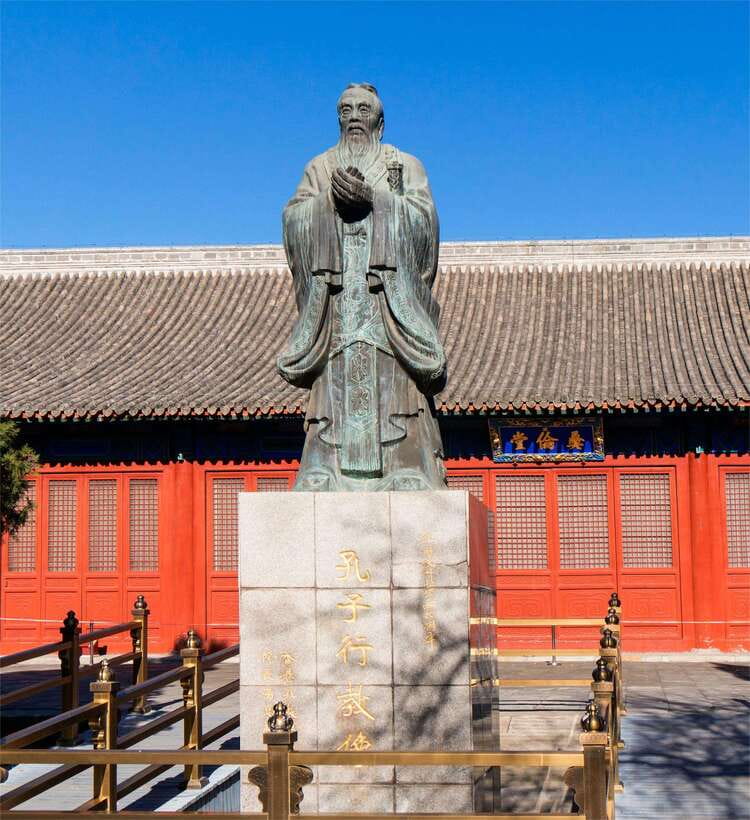
- Two connected historic compounds: The layout follows the traditional plan of the temple on the left and the college on the right.
- A record of imperial exams: Four groups of stone tablets list the names, birthplaces, and ranks of 51,624 jinshi, the highest degree holders in the examination system.
- Yuan-era foundations: The Confucius Temple dates to 1306, and the Imperial College was built in 1308.
- Several exhibitions: The temple has exhibitions on its restored Dacheng Hall, Confucius, and the temple’s history.
- Simple entry requirements: Bring your original passport or ID and use the e-ticket QR code to enter.
One ticket, two sides of an old educational world
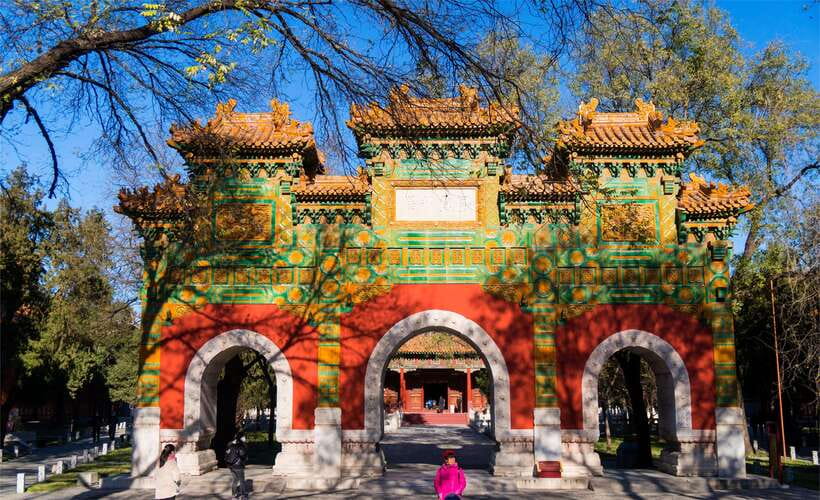
The appeal here is not a single famous object or grand viewpoint. It is the chance to see how two institutions worked together: one honored Confucius and the ideals of learning, while the other trained scholars and managed education for the state.
The two compounds sit side by side in a traditional arrangement, with the Confucius Temple on the left and the Imperial College on the right. That pairing gives the visit a useful shape. You can move from reverence for the teacher to the practical machinery of education, and then connect the halls, courtyards, and exam records to a broader story about how China selected its officials.
The ticket is listed at $7 per person, a modest price for access to both sites and their exhibitions. The value is strongest if you enjoy historical architecture and want time to look closely, rather than simply ticking off a landmark. The e-ticket saves you from buying an admission ticket at the entrance, but it does not include a guide or audio commentary.
The attraction is valid for one day, so you can plan your visit around the day’s other activities. No fixed tour duration or detailed schedule is specified. Give yourself enough time to explore both compounds at a comfortable pace, especially if you like reading displays or studying architectural details.
More tickets and passes around Beijing:
- Beijing: Forbidden City Tour(Group/Private)-Tickets Included
★ 4.8 · 7,974 reviews - 4-Hour Small Group Tour to Forbidden City with Entry Tickets
★ 5.0 · 1,863 reviews - Beijing: Tiananmen Square Registration Service(Ticket)
★ 4.5 · 1,704 reviews
Start at the Confucius Temple
The Confucius Temple was built in 1306, during the Yuan dynasty, and served as a place for ceremonies honoring Confucius through the Yuan, Ming, and Qing periods. Its scale helps explain why it was more than a small neighborhood shrine: the grounds cover more than 22,000 square meters, with about 7,400 square meters of building space.
The temple is arranged around a central axis running from south to north. Along it are the Teacher Gate, Dacheng Gate, Dacheng Hall, and Chong Sheng Temple. This sequence gives the compound a clear ceremonial progression. As you move inward, each gate and hall marks another step toward the principal spaces of worship and remembrance.
The main hall is the natural focus, but the courtyards matter too. They give you room to take in the scale and symmetry of the complex, and they make the route feel deliberate rather than crowded with unrelated buildings. The temple’s architecture is described as Yuan-dynasty in origin, though the complex also reflects its long use across later dynasties.
Three exhibitions are currently identified within the temple: one on the restored Dacheng Hall, one on Confucius, and one on the history of the Beijing Confucius Temple. These displays can help make the rooms and rituals more legible, particularly if you arrive without a guide. An audio guide may be available to buy at the entrance. If you want more context than the exhibition panels provide, it is worth asking about it before you begin walking through the site.
Read the examination story in stone
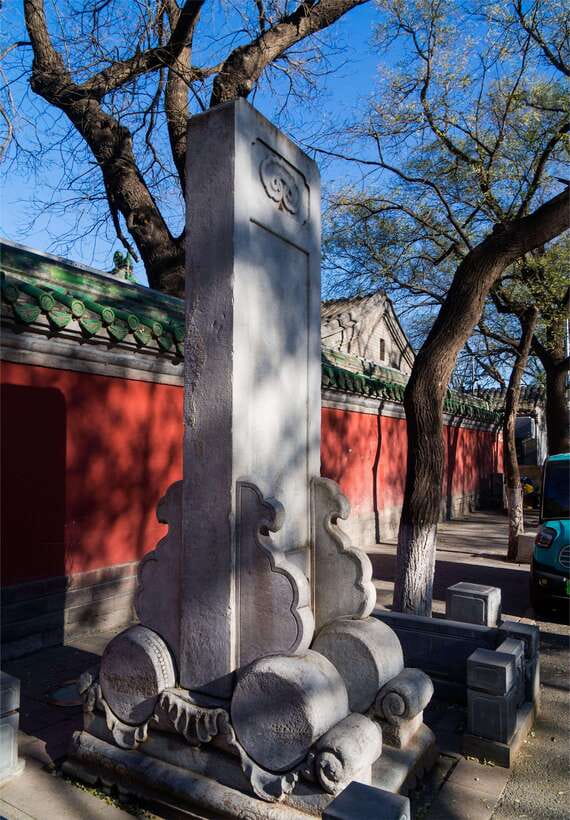
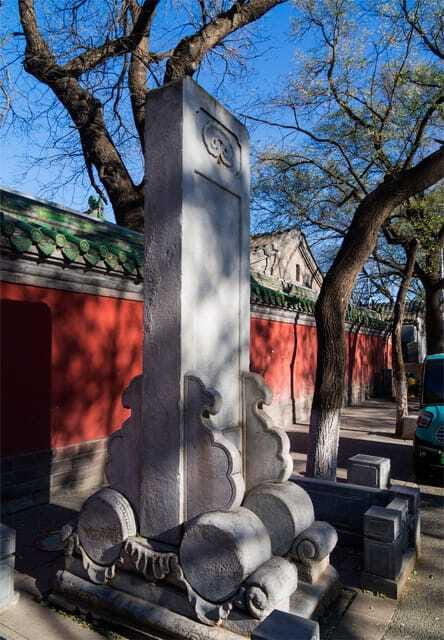
One of the most specific and memorable features of the temple is its collection of 198 stone tablets, arranged in four groups on either side of the front courtyard. Their inscriptions record the names, birthplaces, and ranks of 51,624 jinshi, candidates who earned the highest degree in the imperial examination system.
Those figures are more than a grand total. The tablets connect an imposing ceremonial setting to the lives and ambitions of people who studied for state examinations. They also preserve information useful to researchers tracing candidates’ origins and achievements. Even if you do not read every inscription, the number and scale of the records make the examination system feel tangible.
This is a good place to slow down. The temple’s halls can be appreciated for their formal layout, but the tablets offer a more direct human link to the institution’s purpose. Look at how the records are grouped and placed, and consider the years of study represented by each name. The display is not a quick photo stop if you want to understand why the site mattered.
The temple also gives context to the examination system without presenting itself as an exam hall. Its role was ceremonial, while the Imperial College next door was the country’s highest educational institution and an administrative body for education. Keeping that distinction in mind helps make the transition between the two compounds more meaningful.
Cross into the Imperial College
The Imperial College, also known as Guozijian, was built in 1308, two years after the temple. It served as the highest state educational institution and the central authority for education during the Yuan, Ming, and Qing dynasties. Its grounds cover about 28,000 square meters and are laid out in three courtyards.
The central route runs through Jixian Gate and the Taixue, or Imperial College, Gate, then past a glazed memorial arch toward Biyong Hall, Yilun Hall, and Jingyi Hall. The names are worth noticing as you go, but the broader impression is the carefully ordered design. This is a place built around learning, rank, and ceremony, and its symmetry gives those values physical form.
Buildings and pavilions are arranged beside the central axis, including two halls, six main rooms, an imperial tablet pavilion, and bell and drum pavilions. The layout is traditional and balanced. Rather than one giant hall commanding the whole view, you encounter a sequence of structures that makes the college feel like an institution with distinct spaces and functions.
Biyong Hall is among the named central buildings, and the glazed memorial arch provides a striking marker along the route. The supplied details do not give a room-by-room account of each structure, so I would avoid treating the college as a fully interpreted museum. Its strength is the overall plan and its connection to the education system, not a promise of extensive explanatory signage in every space.
More Beijing tours to consider
- From Beijing: Mutianyu Great Wall Tours with Options
★ 4.9 · 9,216 reviews - Beijing: T-Square & Forbidden City Group or Private Tour
★ 4.8 · 4,446 reviews - All-Inclusive Tour: Tiananmen Square, Forbidden City, Great Wall
★ 5.0 · 2,873 reviews - MuBus: Mutianyu Great Wall ENG/ESP/RUS Guided Bus Tour
★ 5.0 · 2,361 reviews
What the e-ticket does, and what it does not
The ticket includes admission to the attraction. It is not described as including a guide, transport, or an audio guide. The experience is marked as a private group, but no guide or group itinerary is specified, so you should not assume that a private guide will accompany you.
Entry is straightforward in principle: use the QR code and bring your original passport or ID card. The original document matters, so do not rely on a photograph or a photocopy. Keep your ticket and identification accessible when you arrive rather than packed at the bottom of a bag.
The ticket is described as a way to skip the ticket line. That should save you the step of purchasing an admission ticket on site, but it does not necessarily mean you can skip every possible entry check. Have the QR code ready and follow the attraction’s entry instructions.
The site is listed as wheelchair accessible. That is useful information for planning, though the details provided do not describe specific routes, surfaces, or facilities. If you need to confirm access arrangements for a particular part of the complex, check directly before visiting.
You can cancel up to 24 hours in advance for a full refund, and the reserve-now, pay-later option lets you hold your plans without paying at the time of booking. Those terms add flexibility, but the real planning question is whether you want a self-guided visit to two substantial historic sites.
Who will get the most from the visit
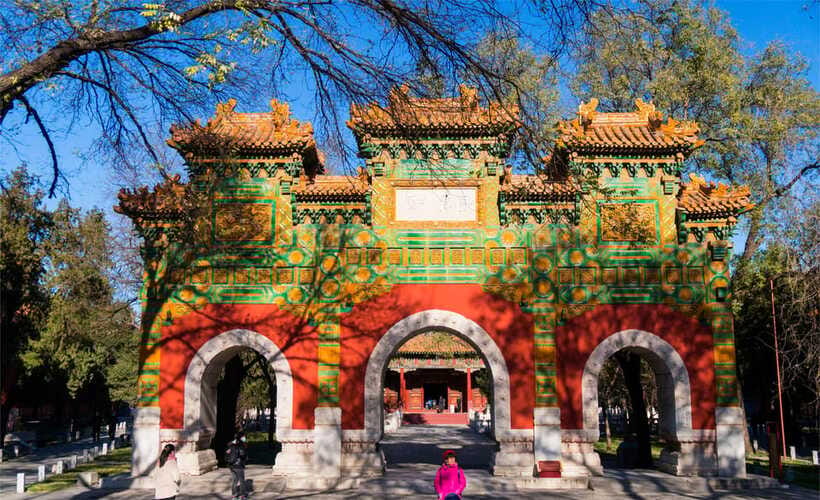
I’d recommend this experience if you are interested in Chinese history, architecture, education, or the imperial examination system. The tablet collection gives the visit a clear point of focus, while the temple and college together offer a broader sense of how learning was honored and organized.
It also suits independent visitors who are comfortable exploring without a live guide. The layout has a central route, and the exhibitions provide some context, but you will need to decide how long to spend at each stop. If you like taking your time with inscriptions and courtyards, the one-day validity gives you room to plan without rushing between the sites.
If you prefer a fully narrated tour, this ticket may feel bare-bones. There is no named guide or included audio commentary, and the audio guide is something you may be able to buy at the temple entrance. For many people, that is a manageable gap. For others, it may be the difference between looking at the architecture and understanding its historical role.
The strongest reason to book is the combination: a major Confucian temple, the former Imperial College, and a remarkable record of exam achievers, all for a low admission price. The main reason to hesitate is not the ticket itself but the amount of interpretation you want. Bring your curiosity, your original ID, and a plan to take the route slowly.
Should you book this ticket?
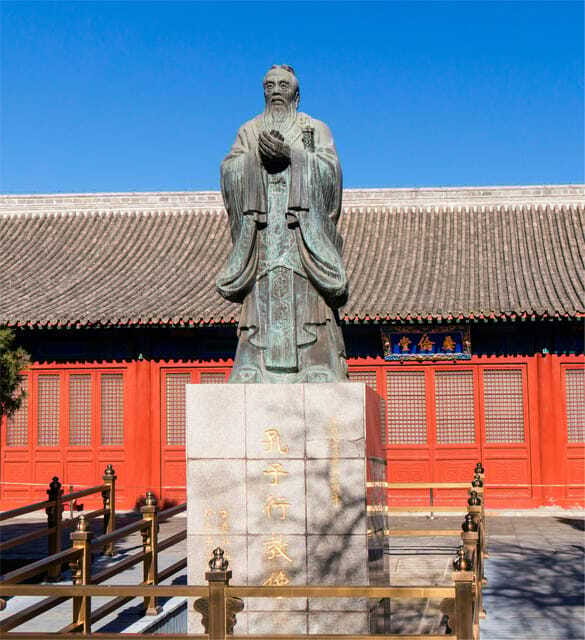
Book it if you want to see the Confucius Temple and Imperial College together and are happy to explore at your own pace. The examination tablets and the contrast between ceremonial temple and state college give the visit a clear purpose, and $7 is good value for access to both compounds.
Skip it if you need a guide included or expect a tightly structured tour. This is an entry ticket, not a narrated experience. For an independent visit, however, the QR entry, flexible one-day validity, and option of an audio guide at the temple make it a practical way to explore an important pair of Beijing sites.
FAQ
What does the ticket include?
It includes admission to the Confucius Temple and Imperial College attraction. A guide and audio guide are not listed as included.
What do I need to bring for entry?
Bring your original passport or ID card, along with your e-ticket QR code.
How long is the ticket valid?
The ticket is valid for one day. A set visit duration is not specified.
Can I skip the ticket line?
The ticket is listed as allowing you to skip the ticket line. You still need to follow the attraction’s entry instructions and show your original identification.
Is an audio guide available?
An audio guide may be available to buy at the temple entrance. It is not listed as part of the ticket.
Can I cancel the booking?
Yes. You can cancel up to 24 hours in advance for a full refund.
Newest listings in Beijing
- Jinshanling Great Wall Small Group self-hiking tour from Beijing★ 4.5 · 6 reviews
- Small Group Mutianyu Great Wall and Ming Tombs Tour with Cable Car and Lunch★ 5.0 · 28 reviews
- Group Tour Including Mutianyu Great Wall And Buffet Lunch★ 4.5 · 28 reviews
- Mini Group: Half-Day Great Wall at Mutianyu Hiking Tour★ 5.0 · 33 reviews
- Beijing Group Coach Tour to Mutianyu Great Wall Without Lunch★ 4.5 · 6 reviews
- Private Tour: Beijing Hutong Night Walking and snacks Taste★ 4.0 · 29 reviews
- Small Group Tours to the Jingshaling Wall with Options★ 5.0 · 8 reviews
- Small Group Beijing Temple of heaven and Summer Palace with Pearl market★ 5.0 · 3 reviews
Beijing Tours, compared.


Forbidden City Tour(Group/Private)-Tickets Included
Read our review →
T-Square & Forbidden City Group or Private Tour
Read our review →
All-Inclusive Tour: Tiananmen Square, Forbidden City, Great Wall
Read our review →
MuBus: Mutianyu Great Wall ENG/ESP/RUS Guided Bus Tour
Read our review →
4-Hour Small Group Tour to Forbidden City with Entry Tickets
Read our review →