
Review · BEIJING WALKING TOURS
Beijing: Peking University Campus Guided Walking Tour
Peking University is more than a collection of handsome buildings. On this two-hour walk, its lake, pagoda, gardens and ceremonial gates become clues to the institution’s past and present. A current student leads the way, with stories connecting the campus to Yenching University, the Old Summer Palace and Qing official Heshen.
I like two things especially: you hear campus history from someone who studies there now, and the tour links famous landmarks to their cultural meaning instead of treating them as photo stops. The group is capped at 10, so there should be room to ask questions and keep the walk personal.
One consideration: two hours is a short window for a large, storied campus, and campus access hours may limit how much you can see. At $39 per person, this is best for you if you value context and a student’s perspective more than a long, free-roaming visit.
Key points
- Meet at the East Gate: Find the stone lion on the right when facing the entrance.
- Finish at the West Gate: The route crosses campus rather than returning to the starting point.
- See signature landmarks: The walk includes Boya Pagoda, Weiming Lake, the Bell Pavilion, Hua Biao pillars and Qilin statues.
- Hear the campus story: Learn about Yenching University, Cai Yuanpei, Yuanmingyuan and Heshen.
- Go with a small group: The English-language tour is limited to 10 participants.
- Bring walking shoes: The experience is on foot and lasts two hours.
From the East Gate to the Campus Story
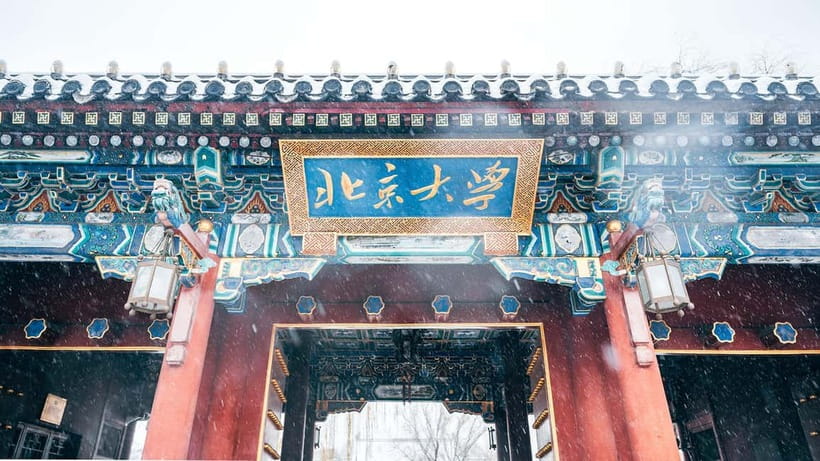
The tour begins at Peking University’s East Gate, with the meeting point at the stone lion on the right side as you face the entrance. That precise landmark helps you find the group without guesswork. From there, your guide takes you across campus and ends at the West Gate, so plan for the walk to finish somewhere different from where it began.
Your guide is a current student, which gives the tour a useful balance. You get the background of a history walk, but also a view of the place as a working university, with academic traditions and student life still in motion. The tour is conducted in English, and the small group size gives you a better chance to ask about details that catch your eye.
Henry has led tours here, and people who have walked with him have valued his clear explanations and patient manner, including with children. Guides can vary, so treat the name as a helpful reference rather than a promise for your departure. The central advantage is the student perspective: the campus is not just a historic site, but a place someone is studying today.
More walking tours around Beijing:
- Beijing Hutong Walking Food and Beer Tour at Hidden Restaurants
★ 5.0 · 1,132 reviews - Private Beijing Walking Tour of the Forbidden City with 7 Options
★ 5.0 · 675 reviews - Forbidden City Private Walking Tour with Optional Sights
★ 5.0 · 400 reviews
Weiming Lake and Boya Pagoda
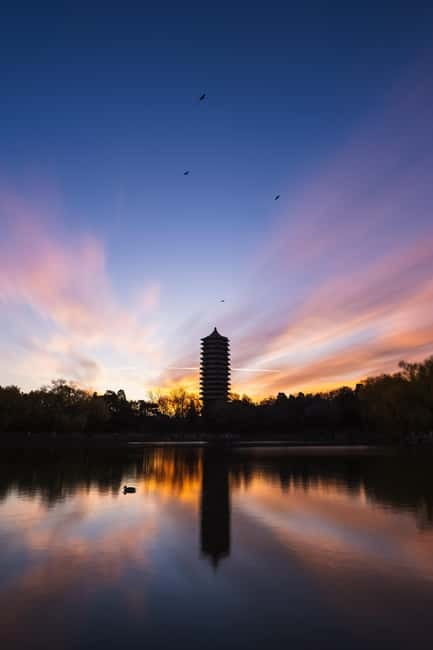
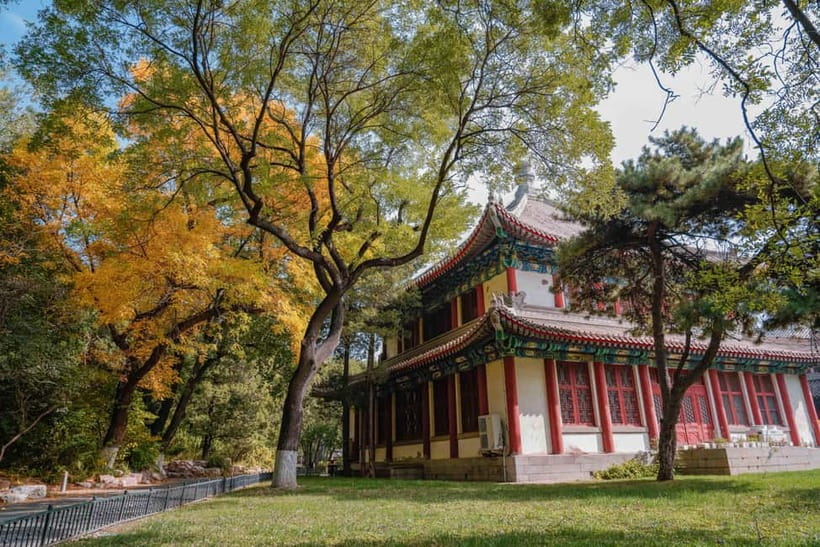
Weiming Lake is one of the campus’s best-known settings, and the tour pairs it with century-old Boya Pagoda. Together, they show how water, architecture and garden design shape the feel of the grounds. Your guide explains the meanings behind the traditional gardens and the ways their layout brings nature and scholarship together.
The value here is not just a pretty view. A lake and pagoda can look like simple scenery if you are walking alone, but a guide can point out how the campus’s traditional design carries ideas about harmony and learning. If you enjoy taking photographs, this is a natural place to have your camera ready. The tour recommends bringing one, though the pace and available time mean you should expect a guided walk, not a long photo session at every stop.
Boya Pagoda is a landmark with a long connection to campus identity. The tour includes it as part of a larger story about how the university’s spaces have developed. You will get more from the visit if you look beyond the pagoda itself and notice its relationship to the lake and surrounding garden setting.
The Bell Pavilion, Hua Biao and Qilin

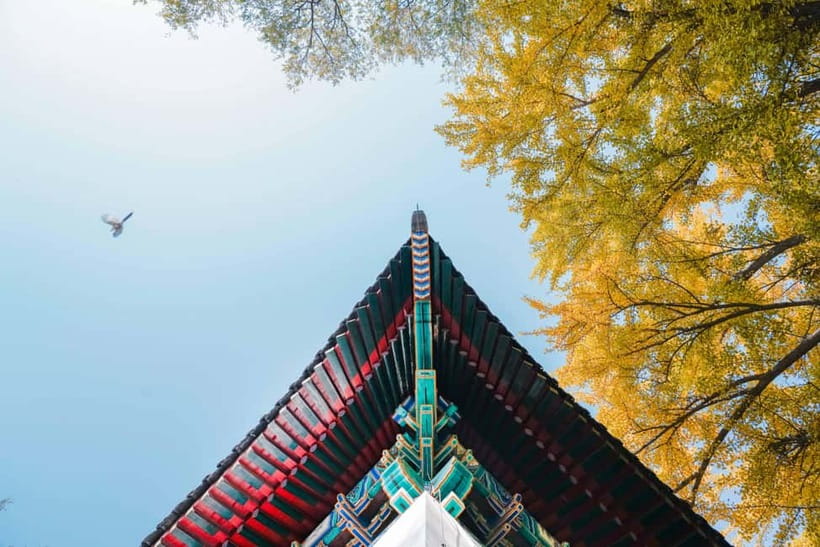
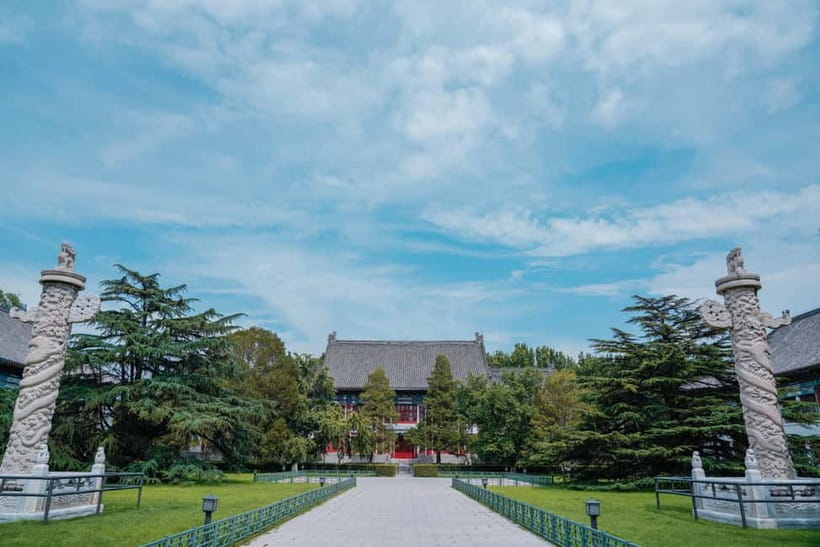
The Bell Pavilion, ornamental Hua Biao pillars and Qilin statues add a different layer to the walk. These are not simply decorative stops: each has cultural meaning, and the guide explains how such symbols contribute to the campus’s character. If Chinese architecture and symbolism are new to you, this is where a short explanation can change what you notice.
The itinerary names these landmarks, but it does not promise a set amount of time at each one. Think of them as part of a connected walk, rather than separate visits with long pauses. That format works well if you like learning as you move; it may feel brisk if you want to linger over every carving or take many photographs.
The old and formal elements also help explain the university’s identity. PKU is a modern academic institution, yet its campus includes traditional forms and spaces that speak to older ideas about order, nature and learning. Your guide can connect the visual details to the broader story, keeping the route from becoming a string of names with no context.
The Library and Cai Yuanpei
The grand Peking University Library is another key stop, along with the statue of Cai Yuanpei, the revolutionary former president of PKU. The tour presents the library as a symbol of the university’s academic life and Cai as a figure central to its institutional story. Together, they bring the walk back to the purpose of the campus: study, ideas and the people who shaped its direction.
The description promises an exploration of the library, but does not specify that the group enters every building or library space. Keep that distinction in mind if you are hoping for an interior visit. You can still appreciate the library’s place in the campus story and ask your guide how it fits into student life today.
Cai Yuanpei’s statue offers a chance to connect a prominent person with the institution he helped lead. Rather than treating the monument as a quick photo stop, listen for the explanation of his role and why he is remembered at PKU. This is one of the tour’s stronger elements for visitors who want more than an architectural overview.
More guided departures around Beijing:
- MuBus: Mutianyu Great Wall ENG/ESP/RUS Guided Bus Tour
★ 5.0 · 2,361 reviews - Beijing Forbidden City Ticket Booking (Optional: guide service)
★ 5.0 · 1,263 reviews - Forbidden City&T-Square Small GroupTours w/ ticket(Eng/Esp Guide)
★ 5.0 · 995 reviews - Beijing: Summer Palace Entry Ticket and Optional Guided Tour
★ 4.7 · 810 reviews
Yenching University, Yuanmingyuan and Heshen

Some of the most surprising parts of the walk reach beyond the campus itself. You hear how PKU developed from its roots as Yenching University, learn about its ties to the Old Summer Palace, or Yuanmingyuan, and encounter the story of Heshen, the infamous Qing Dynasty official.
These connections give the campus a wider historical frame. The buildings and gardens are not isolated from Beijing’s past; they sit within a much longer story of institutions, people and place. A guide can make those links easier to follow than a map or plaque alone, especially if you are seeing PKU for the first time.
The range is ambitious for a two-hour tour. You should expect an introduction, not an exhaustive account of every period or historical figure. If one thread grabs you, ask a question while you are walking. A small group is well suited to that sort of exchange, though the tour still needs to keep moving from the East Gate toward the West Gate.
What a Student Guide Adds
A current student can explain campus culture in a way a general city tour may not. You hear about traditions, academic life, famous alumni and present-day student experiences, all in the setting where those things happen. That firsthand angle is especially useful if you are considering study in China or simply want to understand what makes PKU matter to people who attend it.
The personal element can vary with the guide and the day. Henry has been described as patient and easy to communicate with, including when guiding a family with four children. One past tour also included an invitation to eat in the school cafeteria. That was an extra gesture, not part of the paid package, so do not count on a meal or cafeteria visit when planning your day.
The guide’s role is to interpret, not just escort. You are paying for the stories, cultural explanations and student point of view as much as for the route itself. If you prefer to explore at your own pace or spend an hour at a single landmark, a guided two-hour walk may feel restrictive. If you like having someone connect the dots as you go, it is a sensible way to use limited time.
Is $39 a Fair Price?
At $39 per person, this is not merely a campus stroll. The price covers a two-hour guided walk, visits to historical and cultural landmarks, and an English-speaking student guide. You are also in a group capped at 10, which offers a more direct setting for questions than a large coach-style tour.
The value depends on what you want from PKU. If your aim is to see the lake and pagoda, take a few pictures and leave, you could find the price hard to justify. If you want the background behind the gardens, symbolic monuments, institutional history and current student culture, the guide adds substance that the grounds alone cannot provide.
Food, drinks and transportation to and from the university are not included. Budget for those separately, and remember that the tour ends at the West Gate rather than the East Gate. The duration is two hours, but starting times depend on availability. Comfortable shoes are the practical essential; a camera is a useful extra.
Who Should Take This Walk?
I would recommend this tour to history fans, architecture lovers and anyone curious about Chinese university life. It also makes sense for prospective students and families who want a guided introduction to the campus rather than a quick look at its most famous spots.
Families can consider it too. A guide has successfully led a group with four children, though your own family’s enjoyment will depend on how well the children handle a two-hour walk and historical explanations. There is no food or drink included, so plan accordingly.
You may prefer to skip it if you need a very flexible schedule, want to explore every building at length or are mainly looking for an unguided photo stop. Campus access hours can restrict how much of the grounds you see, and two hours is not enough to cover everything. The tour’s strength is its focused route and interpretation, not unlimited time.
Should You Book?
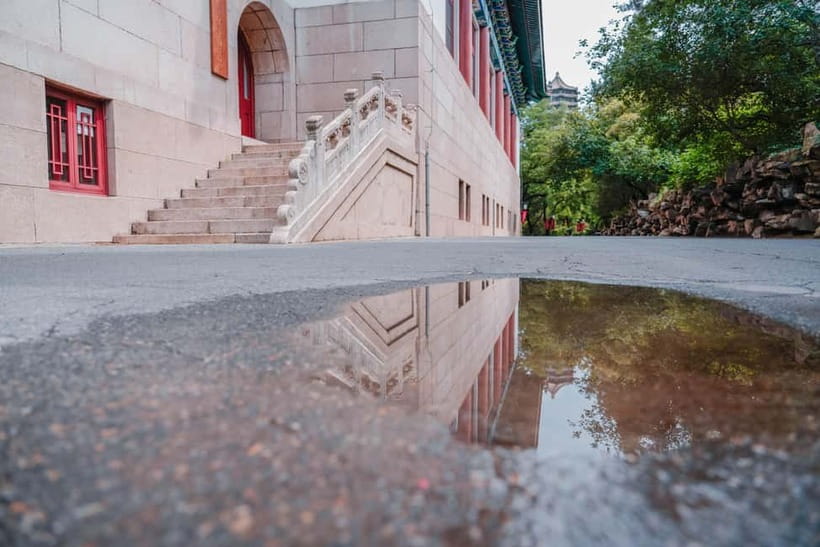
Book this walk if you want PKU to make sense as both a historic institution and a living university. Weiming Lake, Boya Pagoda, the library, the gardens and the ceremonial symbols give you plenty to look at, while a current student helps explain why they matter.
At $39, I see the strongest value for curious visitors who enjoy context and conversation. If you are short on time, the two-hour route gives you a structured introduction. Just keep expectations realistic: it is a guided campus walk, not a full-day visit or a guarantee of access to every building.
FAQ
How long is the Peking University walking tour?
The guided walking tour lasts two hours.
What language is the tour conducted in?
The tour is conducted in English.
Where is the meeting point?
Meet at Peking University East Gate, at the stone lion on the right side when facing the entrance.
Where does the tour finish?
The walk finishes at Peking University West Gate.
What is included in the $39 price?
The price includes a two-hour guided walking tour, visits to historical landmarks and cultural sites, stories about PKU’s history, and insights into student life. Food, drinks and transportation to and from the university are not included.
Can I cancel for a refund?
Yes. You can cancel up to 24 hours in advance for a full refund.
Newest listings in Beijing
- Jinshanling Great Wall Small Group self-hiking tour from Beijing★ 4.5 · 6 reviews
- Small Group Mutianyu Great Wall and Ming Tombs Tour with Cable Car and Lunch★ 5.0 · 28 reviews
- Group Tour Including Mutianyu Great Wall And Buffet Lunch★ 4.5 · 28 reviews
- Mini Group: Half-Day Great Wall at Mutianyu Hiking Tour★ 5.0 · 33 reviews
- Beijing Group Coach Tour to Mutianyu Great Wall Without Lunch★ 4.5 · 6 reviews
- Private Tour: Beijing Hutong Night Walking and snacks Taste★ 4.0 · 29 reviews
- Small Group Tours to the Jingshaling Wall with Options★ 5.0 · 8 reviews
- Tai Chi or Kung Fu plus Chinese Calligraphy Learning Class★ 5.0 · 3 reviews
Beijing Walking Tours, compared.
Beijing Hutong Walking Food and Beer Tour at Hidden Restaurants
Read our review →
Private Beijing Walking Tour of the Forbidden City with 7 Options
Read our review →
Forbidden City Private Walking Tour with Optional Sights
Read our review →

Beijing City Walk: Explore Hutongs Life and Old Beijing
Read our review →
Highlights of Forbidden City Private Walking Tour
Read our review →
Browse the lists this tour appears in