
Review · FORBIDDEN CITY TOURS
Beijing Forbidden City Tour With Entry Tickets
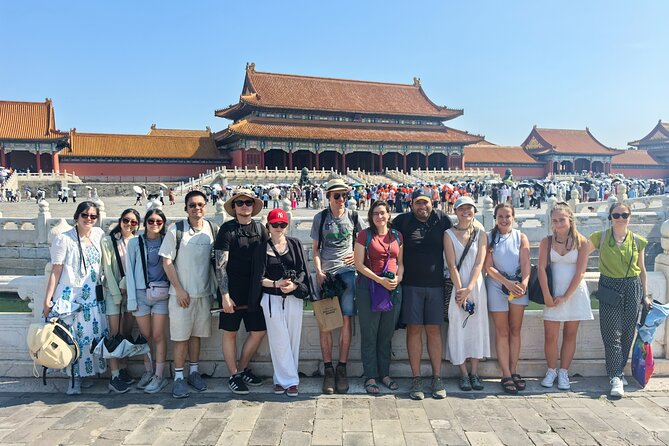
The Forbidden City is easier to understand when someone connects its grand halls and quieter corners to the people who lived behind its walls. This roughly four-hour walk covers the Ming and Qing emperors, the last emperor Puyi, and the site’s change from imperial residence to the Palace Museum.
I like two things here: admission is included, and the guide puts architecture and symbolism into context instead of leaving you to guess what the buildings meant. I also like that the tour ends at the north gate, with directions for continuing to Jingshan Park or Tiananmen Square.
One point to plan around: a peak-season booking made less than seven days ahead may still require a ticket line. The group can have up to 20 people, so this is a shared tour rather than a private visit.
Key points before you book
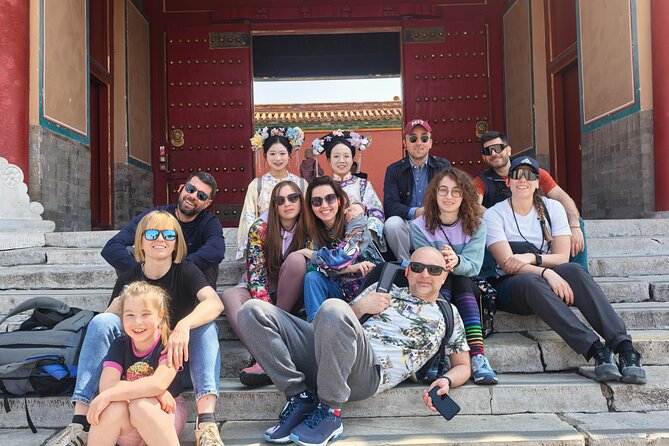
- About 3.5 hours inside the Palace Museum: The advertised visit is a substantial walk through the Forbidden City, not a brief introductory stop.
- English-speaking guide: Expect explanations of construction, imperial history, architecture, and symbolism.
- Admission included: The ticket is part of the tour price, with a possible passport-based ticket queue for late peak-season bookings.
- A story-led visit: The subjects include 24 Ming and Qing emperors, Puyi, and Reginald Fleming Johnston, the Scot who lived in the Forbidden City.
- North-gate finish: Your guide can point you toward Jingshan Park or Tiananmen Square after the tour.
- Small-to-medium group cap: The maximum is 20 people, and the listed price is $36 per person.
Why a guide changes the Forbidden City visit
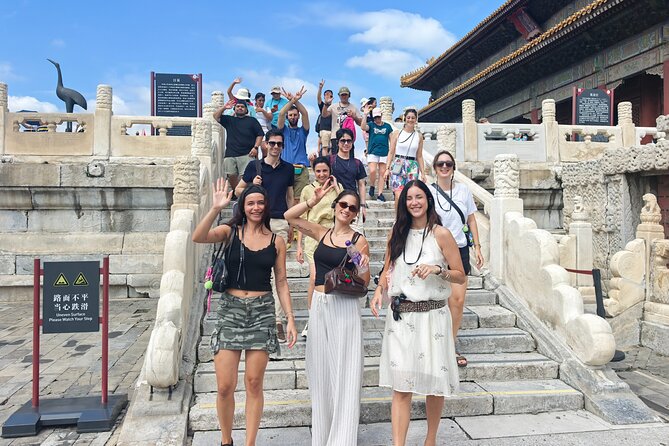
The Forbidden City is not a single palace building. It is an immense former imperial compound, now known as the Palace Museum, with a long succession of rulers and layers of history behind its walls. Its scale can make a self-guided walk feel like a procession of impressive roofs and courtyards unless you know what to look for.
This tour sets aside around three to four hours for the site, with about three and a half hours listed for the main visit. That gives your guide room to explain the construction and historical background, point out architectural details, and bring the lives of the emperors into the story. The aim is to make the place legible, not simply to march you through it.
That matters most when a detail seems decorative or formal. The guide is there to explain the meaning and purpose behind what you see, including architectural symbolism. You can then look at the buildings with a question in mind: who used this space, and what did its design communicate?
The tour’s historical thread also extends beyond the imperial period. You hear about Puyi, the last emperor of China, and Reginald Fleming Johnston, a Scot who lived in the Forbidden City. The story continues into the site’s opening to the public and its transformation into the Palace Museum after the Qing dynasty fell.
The Palace Museum was established in 1925, and 2025 marked its centenary. That anniversary gives the museum’s modern identity a useful place in the story: what had been a seat of imperial power became a public institution, and its meaning changed along with the country.
More Forbidden City tours around Beijing:
- Beijing: Forbidden City Tour(Group/Private)-Tickets Included
★ 4.8 · 7,974 reviews - Beijing: T-Square & Forbidden City Group or Private Tour
★ 4.8 · 4,446 reviews - All-Inclusive Tour: Tiananmen Square, Forbidden City, Great Wall
★ 5.0 · 2,873 reviews
Following the emperors through the Palace Museum
The principal stop is the Forbidden City, also called the Palace Museum. The guide discusses the 24 emperors who lived there during the Ming and Qing dynasties, connecting individual lives to the buildings and the wider history of China.
That long span is useful context. Instead of treating the site as one frozen moment, you can hear how it served rulers across two dynasties and how the story moved toward the final days of the Qing. The guide’s explanations make the scale of the place easier to grasp: this was a working imperial residence, not just a collection of photogenic halls.
The tour also promises attention to less noticed corners as well as the major buildings. That is a welcome idea in a complex where it is easy to focus only on the most imposing structures. A guide can help you notice details you might otherwise pass by, though the exact stops and route are not specified.
Expect a walking tour, not a lecture in one spot. The visit lasts several hours, and the information comes as you move through the grounds. If you like history explained in place, that format should suit you. If you prefer to pause for long stretches on your own or follow a strict personal route, a group tour may feel more directed than you want.
The personal stories: Puyi and Johnston
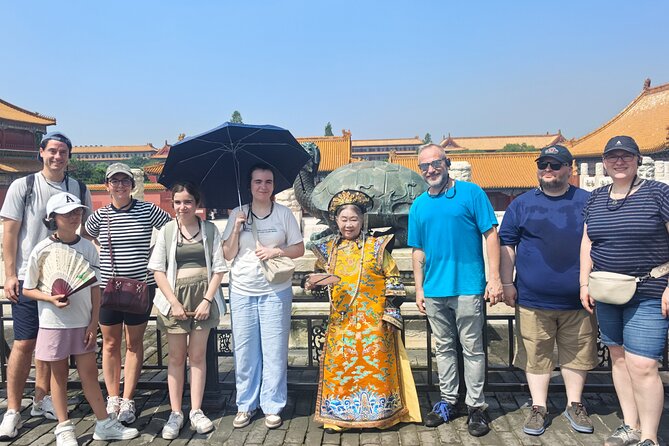
Puyi’s story adds a human scale to the Forbidden City. He was the last emperor of China, and his life helps bridge the imperial period and the end of the Qing dynasty. Rather than leaving the past as a sequence of rulers and dates, the guide can use his story to explain what the end of the monarchy meant for the palace.
Reginald Fleming Johnston offers another unusual perspective. A Scot who lived in the Forbidden City, he provides a link between the palace’s private imperial life and the wider world beyond its walls. These stories are among the more distinctive parts of the tour because they move beyond the expected parade of emperors.
The guide also explains how the Forbidden City opened to the public and became the Palace Museum after the Qing dynasty fell. That transition is central to understanding the place today. You are not only seeing a former residence; you are seeing a site whose purpose and audience changed dramatically.
What the guide adds to the walk
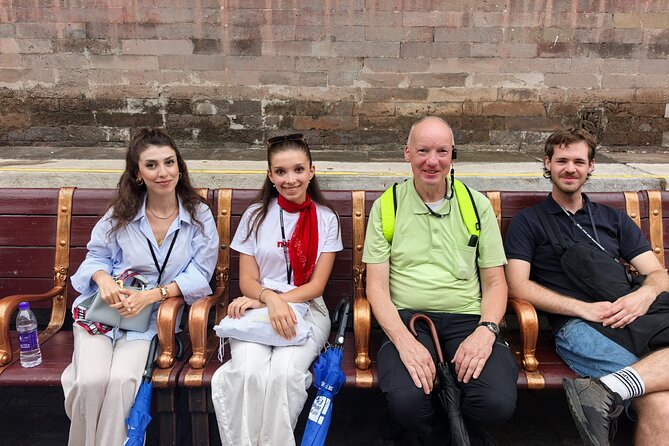
The tour is led in English, and its strongest practical promise is clear explanation. The subject matter ranges from construction history to Chinese culture, imperial biography, and architectural symbolism. For a first visit, that mix can help you understand both the physical site and the ideas that shaped it.
Guide names associated with the tour include Alex, Jessica, and Dan, while the provider is Discover Beijing’s Treasures with Alex Zhang. Your specific guide is not guaranteed by the details provided, so treat those names as examples rather than a promise. The qualities to look for are good communication, a clear pace, and the ability to explain the history without turning every stop into a lecture.
The tour is capped at 20 people. That is not a private experience, but it also sets a limit on group size. If you are choosing between this and exploring alone, weigh the trade-off: you give up some freedom to linger wherever you choose, but gain a guide who can organize the history and point out details you might miss.
The guide is also useful at the end. Before you leave, you can ask for directions or suggestions for what to do next. Jingshan Park, just behind the Forbidden City, is one recommended option; the guide can also explain the way to Tiananmen Square.
More tickets and passes around Beijing:
- 4-Hour Small Group Tour to Forbidden City with Entry Tickets
★ 5.0 · 1,863 reviews - Beijing: Tiananmen Square Registration Service(Ticket)
★ 4.5 · 1,704 reviews - Beijing: The Temple of Heaven or Summer Palace Entry Ticket
★ 4.6 · 1,286 reviews - Beijing Forbidden City Ticket Booking (Optional: guide service)
★ 5.0 · 1,263 reviews
Finishing at the north gate
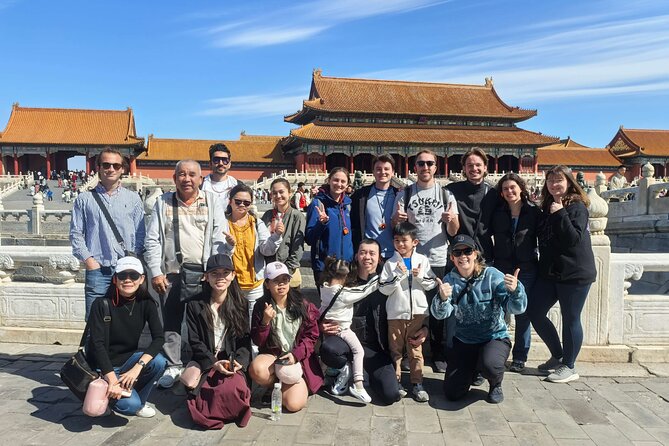
The tour ends at the Gate of Divine Prowess, the Forbidden City’s north gate. That makes the finish practical: you are already at the side of the complex that faces Jingshan Park, and the guide can explain how to continue there independently.
Jingshan Park is worth considering if you want a different view after hours among the palace buildings. From the top of its hill, you can see a panorama of the Forbidden City and Beijing’s old urban area. The park visit is not part of the guided tour, so plan for it as a separate stop.
Tiananmen Square is another possible next destination, with directions available from the guide. The tour does not include a visit to the square, so do not confuse the route advice with an additional guided stop.
This end point gives the tour a useful sense of closure. You finish with a clear option for a view from above or a route onward, rather than simply being left to work out where you are after the walk.
Is $36 good value?
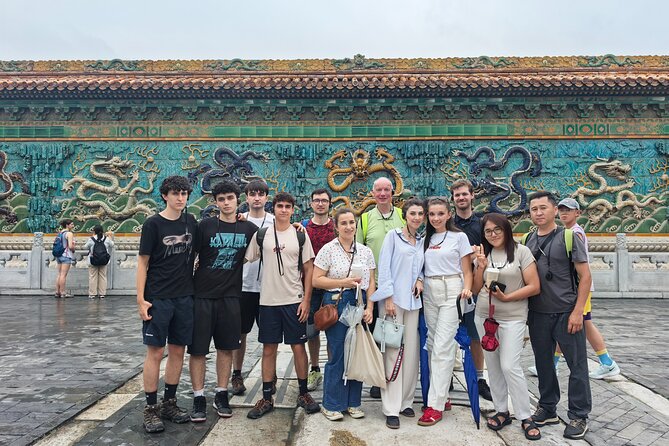
At $36 per person, the tour combines a multi-hour English-language guided visit with admission to the Palace Museum. The main value is the explanation: you are paying not only to enter, but to have someone organize the history, symbolism, and personal stories while you are on site.
The inclusion of admission makes the price easier to assess, but timing matters. In peak season, if you book less than seven days in advance, you may need to wait in line on the day to obtain tickets using your passport. So the included ticket does not necessarily mean a completely queue-free entry in that situation.
This tour is strongest value if the Forbidden City is a priority and you want context rather than a quick walk through. It is less compelling if you already know the site well, prefer to explore at your own pace, or want a private guide. The maximum group size of 20 is worth considering if close interaction with the guide is important to you.
The tour has a mobile ticket, confirmation is provided at booking, and it is near public transportation. Service animals are allowed, and most people can participate. Those details make the basics straightforward, but they do not replace checking your own plans and needs before booking.
Who should choose this tour?
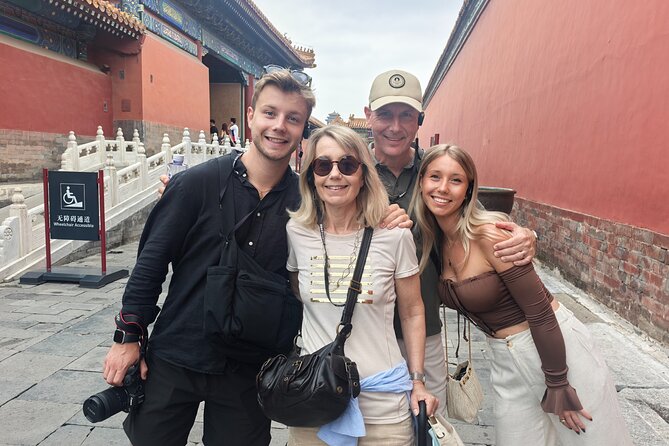
I would put this tour high on the list for a first visit to Beijing, especially if you want the Forbidden City to make sense beyond its scale and grandeur. The guide’s focus on emperors, construction, symbolism, Puyi, Johnston, and the museum’s later history gives you several ways into the story.
It also suits you if you want a structured half-day activity and a clear next step afterward. You can finish at the north gate, ask about Jingshan Park or Tiananmen Square, and continue on your own.
You may prefer an independent visit if you want to stop for as long as you like, avoid a group pace, or already have a detailed plan for the complex. And if your booking falls within seven days of a peak-season visit, allow for the possibility of a ticket line rather than assuming admission will be immediate.
Should you book it?
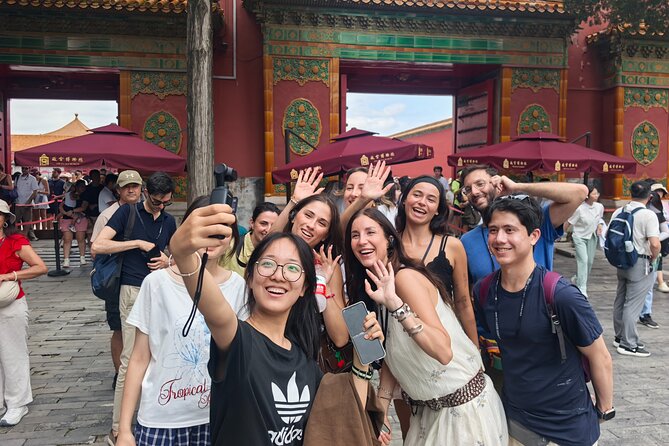
Book this tour if you want an English-speaking guide to connect the Forbidden City’s buildings with the emperors, Puyi, Johnston, and the Palace Museum’s modern role. At $36, included admission and roughly three and a half hours of guided context make it a solid choice for a first visit.
Skip it if you strongly prefer to explore alone or need a private, fully flexible pace. If you do book, avoid leaving it until the final week of peak season when possible, and keep Jingshan Park in mind for the view after the tour.
FAQ
How long is the Forbidden City tour?
The experience lasts about four hours. The main visit inside the Palace Museum is listed as approximately three hours and 30 minutes.
Is admission to the Forbidden City included?
Yes. Admission tickets are included in the tour package.
Could I still have to wait in line for a ticket?
Yes. If you book less than seven days in advance during peak season, you may need to wait in line on the day and use your passport to get the ticket.
What language is the tour in?
The tour is led by an English-speaking guide.
Where does the tour start and end?
It starts in Donghuamen Subdistrict in Dongcheng, Beijing. It ends at the Gate of Divine Prowess, the north gate of the Forbidden City.
How large can the group be?
The maximum group size is 20 people.
What historical subjects does the guide cover?
The guide explains the Forbidden City’s construction and history, the 24 Ming and Qing emperors who lived there, Puyi, Reginald Fleming Johnston, and the site’s change into the Palace Museum after the Qing dynasty fell.
Can I visit Jingshan Park after the tour?
Yes. The guide can give you information for visiting Jingshan Park independently. It is behind the Forbidden City, and the hilltop offers views of the palace and Beijing’s old urban area.
What is the cancellation policy?
You can cancel for a full refund if you do so at least 24 hours before the experience starts. Cancellations or changes made less than 24 hours before the start are not accepted for a refund or change.
Newest listings in Beijing
- Jinshanling Great Wall Small Group self-hiking tour from Beijing★ 4.5 · 6 reviews
- Small Group Mutianyu Great Wall and Ming Tombs Tour with Cable Car and Lunch★ 5.0 · 28 reviews
- Group Tour Including Mutianyu Great Wall And Buffet Lunch★ 4.5 · 28 reviews
- Beijing Group Coach Tour to Mutianyu Great Wall Without Lunch★ 4.5 · 6 reviews
- Mini Group: Half-Day Great Wall at Mutianyu Hiking Tour★ 5.0 · 33 reviews
- Private Tour: Beijing Hutong Night Walking and snacks Taste★ 4.0 · 29 reviews
- Small Group Tours to the Jingshaling Wall with Options★ 5.0 · 8 reviews
- Tai Chi or Kung Fu plus Chinese Calligraphy Learning Class★ 5.0 · 3 reviews
Forbidden City Tours, compared.
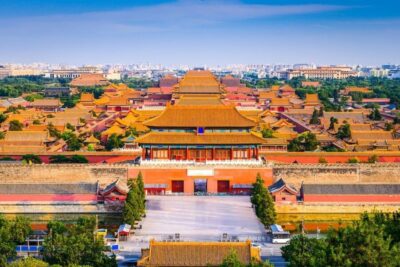
Forbidden City Tour(Group/Private)-Tickets Included
Read our review →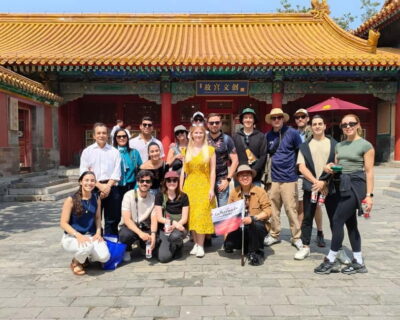
T-Square & Forbidden City Group or Private Tour
Read our review →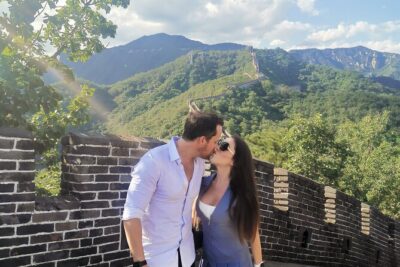
All-Inclusive Tour: Tiananmen Square, Forbidden City, Great Wall
Read our review →
4-Hour Small Group Tour to Forbidden City with Entry Tickets
Read our review →
Beijing Full Day Tours: Tiananmen Sq, Forbidden City, Great Wall
Read our review →
Tianmen Square, Forbidden City & Royal Museum Tours
Read our review →
Beijing Forbidden City Ticket Booking (Optional: guide service)
Read our review →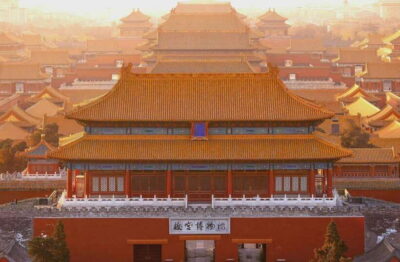
Forbidden City and Tian’anmen Square Waking Tour
Read our review →Browse the lists this tour appears in