Review · BEIJING TOURS
Confucius Temple and Imperial College Entrance Ticket
Beijing’s Confucius Temple and the old Imperial College sit side by side, offering a close look at how education and government worked in imperial China. The temple dates to 1302, and the college to 1306. Among the site’s most telling features are stone steles recording scholars who passed the Imperial Examination.
I like the pair of historic sites in one visit and the freedom to explore at your own pace, with English-language exhibits available for an independent visit. I also like the low entry price: about $8 per person. One thing to plan for is ticket delivery. Your tickets are sent five days before your visit, and a QR code problem has caused trouble at the entrance, so keep the provider’s contact details handy.
What to know before you go
- Two connected sites: Visit the Temple of Confucius and the Guozijian, the former imperial college, in one outing.
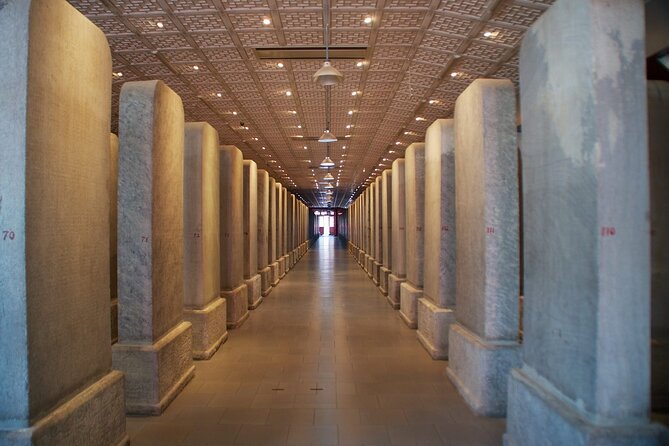
- A record of examination success: Stone steles preserve the names of scholars who passed the Imperial Examination.
- A substantial visit for a modest price: Admission costs about $8 per person, and you may want two to three hours to read the exhibits and explore.
- Go with or without a guide: English-language instructions and exhibits support independent visits. An English-speaking guide is included if you select the guided option.
- Close to the Lama Temple: The sites are a short walk apart, making this a practical pairing for a day in the neighborhood.
- Check your QR codes: Two codes were issued in one booking, but one did not work at the entrance. Keep the provider’s contact number available in case you need help.
Two sites that explain imperial learning
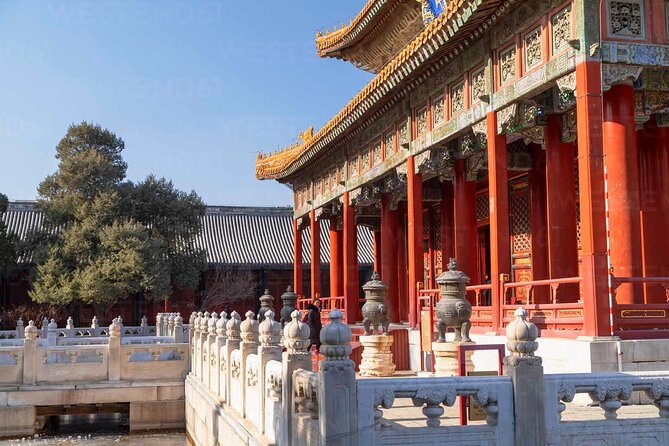
The name of this outing can sound like a single temple visit, but you are entering two connected places with different roles. The Temple of Confucius was built for officials to honor and make offerings to Confucius. Beside it, the Guozijian served as the imperial college during the Yuan, Ming, and Qing dynasties.
That combination makes the visit more useful than a quick stop to admire a historic building. The temple gives you a sense of the respect accorded to Confucius, while the college helps explain the educational system that trained scholars and officials. You can see the setting and the records of achievement together.
The Beijing temple is described as China’s second largest Confucian temple, after the one in Qufu, Confucius’ hometown. It was originally built in 1302. Its statues, carvings, scholarly halls, and stone steles give you plenty to look at, though the site will mean more if you take time to read rather than simply walk through.
More tickets and passes around Beijing:
- Beijing: Forbidden City Tour(Group/Private)-Tickets Included
★ 4.8 · 7,974 reviews - 4-Hour Small Group Tour to Forbidden City with Entry Tickets
★ 5.0 · 1,863 reviews - Beijing: Tiananmen Square Registration Service(Ticket)
★ 4.5 · 1,704 reviews
Inside the Temple of Confucius
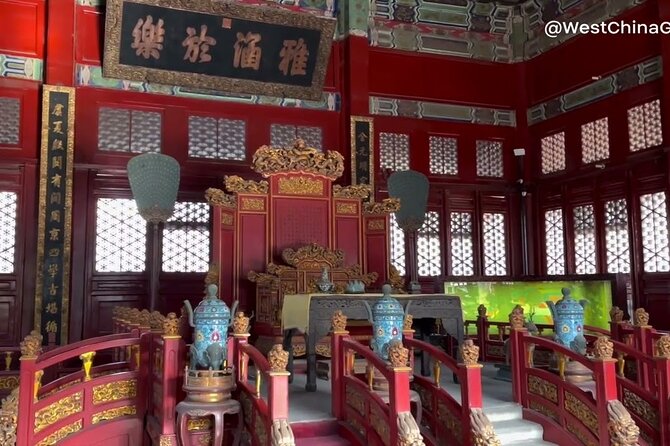
The temple’s purpose was ceremonial: officials came here to honor Confucius and offer sacrifices. That context helps you read the space as more than a collection of old halls. It was part of the public life of the empire, where education and respect for learning were given an official setting.
Look for the temple’s statues and carvings, then spend time with the stone steles. The steles record the names of scholars who passed the Imperial Examination, connecting the physical site to the lives and ambitions of people who sought success through study. The names make the examination system feel less abstract than a textbook description.
You will not get the full value from a rushed walk-through. English-language instructions and exhibits are available, which makes an independent visit practical if you are comfortable reading as you go. One visitor estimated that two to three hours was a good amount of time for reading and seeing the site. That is a useful guide, though your own pace will depend on how much you stop to study.
The Guozijian and the old imperial college
The Guozijian was constructed in 1306 and served as the imperial college during the Yuan, Ming, and Qing dynasties. Today, it forms part of the museum experience alongside the temple. Its scholarly halls and the wider collection help show how imperial China organized education.
I find the connection between the college and the examination steles especially valuable. The college represents the world of formal learning; the names carved in stone point toward the people who succeeded within that system. Taken together, they give you a concrete way to think about the place of scholarship in government and society.
The site is made up of multiple halls and historic features, not one single display. That means you can set your own pace, but it also helps to arrive ready to read. If you are mainly seeking a quick photo stop, the ticket may feel less rewarding than it does to someone curious about history and education.
Going with a guide or exploring on your own
The ticket can be used for an independent visit, and English-language instructions and exhibits are available around the site. That is a good fit if you like to linger over displays, follow your own interests, or keep your day flexible. The entry price is low enough that you are not paying a large premium simply to gain access.
An English-speaking guide is available if you select the guided option. The supplied details do not name a guide or specify the guided tour’s length, so check the option carefully when booking if personal explanation is important to you. A guide may help connect the temple’s ceremonial role with the college’s educational history, while the exhibits offer a workable alternative for independent visitors.
The activity is described as private, meaning only your group participates. That may matter if you choose the guided option and prefer not to share the experience with a larger tour group. For a basic ticket, the main choice is simpler: explore at your own speed, or pay for the guide option if you want spoken context.
More Beijing tours to consider
- From Beijing: Mutianyu Great Wall Tours with Options
★ 4.9 · 9,216 reviews - Beijing: T-Square & Forbidden City Group or Private Tour
★ 4.8 · 4,446 reviews - All-Inclusive Tour: Tiananmen Square, Forbidden City, Great Wall
★ 5.0 · 2,873 reviews - MuBus: Mutianyu Great Wall ENG/ESP/RUS Guided Bus Tour
★ 5.0 · 2,361 reviews
Time, location, and ticket value
The listed duration is approximately one day, but that does not mean you need a full day inside the museum. A two-to-three-hour visit is a practical expectation if you plan to read the exhibits and explore the halls. The site is a short walk from the Lama Temple, so you can pair the two attractions without arranging a long transfer between them.
Public transportation is nearby, which helps keep the visit straightforward. The ticket is about $8 per person, a modest price for access to two linked historic sites. Group discounts are available, so it is worth checking the price if you are booking for several people.
This is an admission ticket, not a full-day guided itinerary with transportation or meals. Its value lies in access and flexibility. You can spend longer with the exhibits, move on when you are ready, and decide whether the optional English-speaking guide is worth the added cost for your group.
A small but important QR-code precaution
Tickets are sent five days before your travel date, rather than immediately with the booking. Keep an eye out for them and check that you have the required codes before you set off. In one reported case, a booking for two people produced two QR codes, but only one worked at the entrance. The pair was allowed in after explaining the problem to a guard, but that depended on the guard’s goodwill.
To avoid being caught without a backup, save the ticket details and the provider’s contact number where you can reach them. If a code fails, contact the provider rather than assuming the entrance staff can resolve it. This is a practical precaution, not a reason to avoid the ticket, but it is worth knowing before you arrive.
Who will get the most from this visit
This site suits you if you enjoy reading museum displays and want a clearer picture of how learning shaped imperial China. The steles are a particular draw if you like seeing historical records in their original setting. The two-site layout also works well if you want to make the most of a visit to this part of Beijing.
It is also a good choice if you prefer to explore independently. The English-language material gives you a way to understand the exhibits without hiring a guide, while the optional English-speaking tour offers more support if you want a person to explain the site. Families and small groups can consider the group discount, though the available details do not specify its terms.
You may find it less satisfying if you want a highly structured tour with a published schedule, extensive personal commentary, or transport included. Those details are not part of the basic ticket offer. Think of it as an affordable museum visit with the option to add a guide, rather than a complete sightseeing package.
Should you book the Confucius Temple ticket?
Book it if you are interested in Confucius, imperial education, or the examination system, and you are happy to spend a couple of hours reading and exploring. The combination of temple, former college, and examination steles gives the visit a clear focus, and the price is modest for two adjacent historic sites.
If you prefer spoken explanation, select the English-speaking guide option and confirm its details when booking. If you plan to go independently, the English-language exhibits make that a reasonable choice. In either case, watch for the tickets arriving five days before your visit and keep the provider’s contact number handy in case a QR code causes trouble.
FAQ
How much does the entrance ticket cost?
The ticket is listed at about $8 per person. Group discounts are available.
How long should I plan to spend at the sites?
The experience is listed as approximately one day, but two to three hours is a useful estimate if you plan to read the exhibits and explore.
Is an English-speaking guide included?
An English-speaking guide is included if you select the related guided option. English-language instructions and exhibits are also available for independent visits.
When will I receive my tickets?
The tickets are sent five days before your travel date.
Is the Lama Temple nearby?
Yes. The Temple of Confucius and Guozijian Museum are a short walk from the Lama Temple.
Can I cancel for a refund?
Yes. You can cancel at least 24 hours before the experience’s start time for a full refund. Cancellations made less than 24 hours before the start time are not refunded.
Newest listings in Beijing
- Jinshanling Great Wall Small Group self-hiking tour from Beijing★ 4.5 · 6 reviews
- Small Group Mutianyu Great Wall and Ming Tombs Tour with Cable Car and Lunch★ 5.0 · 28 reviews
- Group Tour Including Mutianyu Great Wall And Buffet Lunch★ 4.5 · 28 reviews
- Mini Group: Half-Day Great Wall at Mutianyu Hiking Tour★ 5.0 · 33 reviews
- Beijing Group Coach Tour to Mutianyu Great Wall Without Lunch★ 4.5 · 6 reviews
- Private Tour: Beijing Hutong Night Walking and snacks Taste★ 4.0 · 29 reviews
- Small Group Tours to the Jingshaling Wall with Options★ 5.0 · 8 reviews
- Tai Chi or Kung Fu plus Chinese Calligraphy Learning Class★ 5.0 · 3 reviews
Beijing Tours, compared.


Forbidden City Tour(Group/Private)-Tickets Included
Read our review →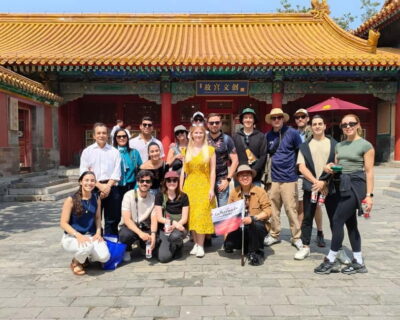
T-Square & Forbidden City Group or Private Tour
Read our review →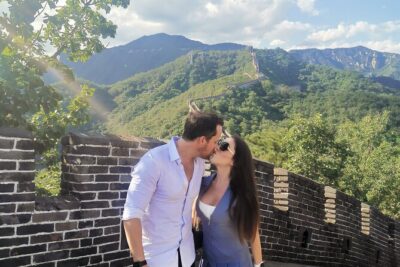
All-Inclusive Tour: Tiananmen Square, Forbidden City, Great Wall
Read our review →
MuBus: Mutianyu Great Wall ENG/ESP/RUS Guided Bus Tour
Read our review →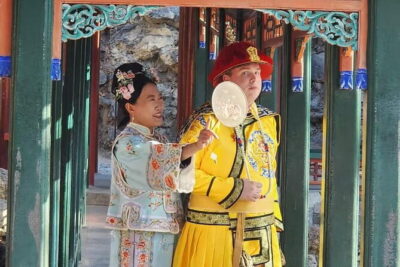
4-Hour Small Group Tour to Forbidden City with Entry Tickets
Read our review →